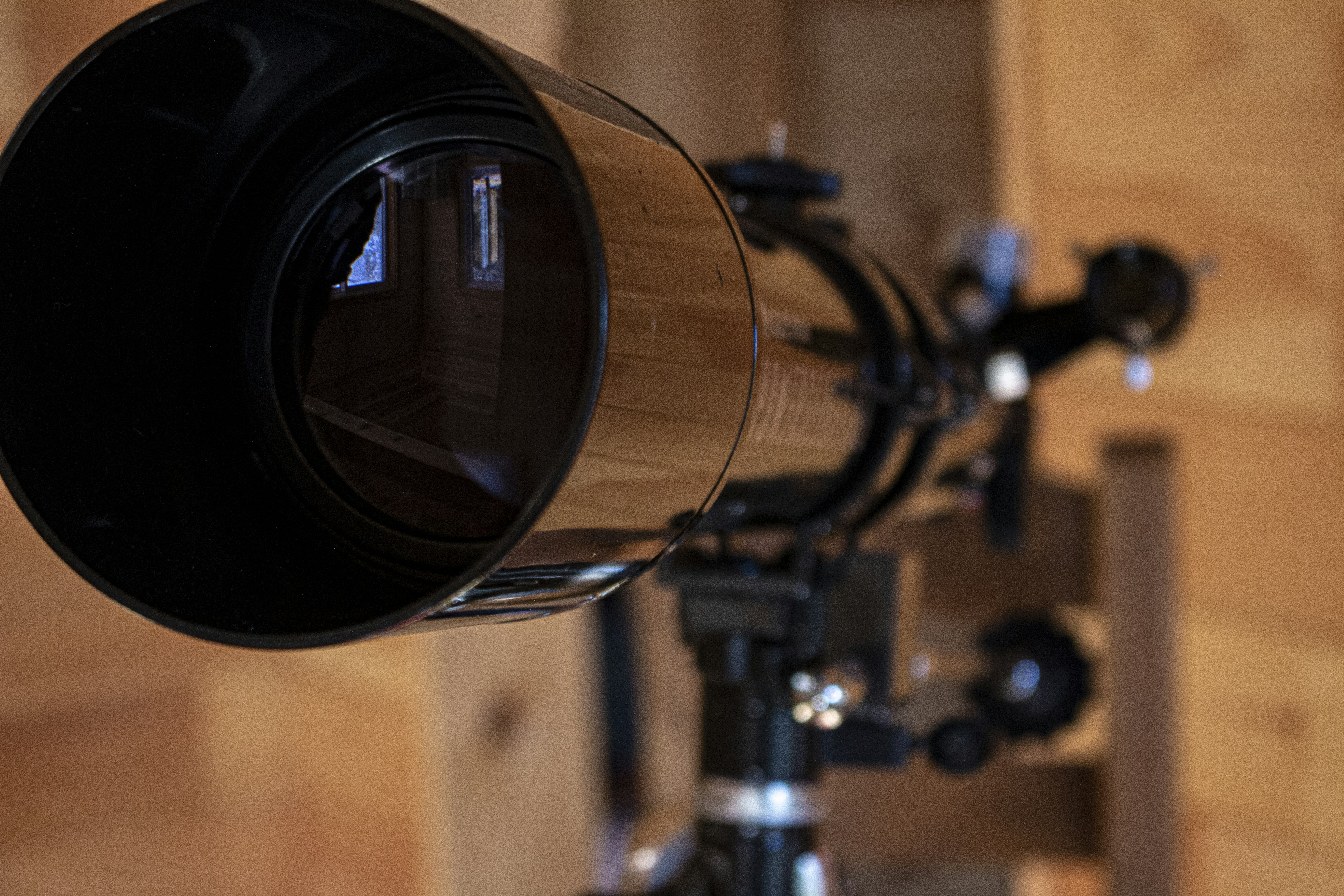
This guide covers Choosing the Right Telescope Mount: the main ideas, the evidence behind them, and open questions in practical astronomy.
This guide explains Choosing the Right Telescope Mount in clear language for curious readers. This article focuses on equipment guide. It is part of VortexCelest's practical astronomy section and summarizes established findings, how they are measured, and what remains uncertain.
Understanding Mount Types
Mount choice affects tracking accuracy: equatorial mounts align with Earth's axis, while alt-az mounts need periodic field rotation for astrophotography.
Telescope performance depends on aperture, optical quality, mount tracking, and observing site.
When reading news about understanding mount types, look for the data source, the time span of the record, and whether multiple teams agree.
- Alt-azimuth (Alt-Az) Mounts: Simple, intuitive, and move in up-down (altitude) and side-to-side (azimuth) motions.
- Equatorial Mounts: Designed to track celestial objects as they move across the sky due to Earth's rotation, requiring alignment with the celestial pole.
Alt-azimuth Mounts: Simplicity for Visual Observing
Mount choice affects tracking accuracy: equatorial mounts align with Earth's axis, while alt-az mounts need periodic field rotation for astrophotography.
Equatorial mounts track Earth's rotation on one axis; alt-az mounts are simpler but need derotation for long photos.
Open questions remain where data are sparse or models disagree; future observations may narrow those gaps.
Pros and Cons
- Pros: Easy to use, often lighter and more portable, generally less expensive.
- Cons: Cannot track celestial objects without constant manual adjustment in both axes, unsuitable for long-exposure astrophotography.
Variations
- Manual Alt-Az: Simple point-and-shoot.
- Dobsonian Mounts: A type of alt-azimuth mount specifically designed for large Newtonian reflector telescopes, known for their stability and ease of use for visual observing.
- GoTo Alt-Az: Computerized systems that automatically locate and track objects (see GoTo section below).
Equatorial Mounts: Precision for Astrophotography
Mount choice affects tracking accuracy: equatorial mounts align with Earth's axis, while alt-az mounts need periodic field rotation for astrophotography.
Long-term monitoring and occasional dedicated missions together build the evidence base for equatorial mounts: precision for astrophotography.
Understanding equatorial mounts: precision for astrophotography helps place Choosing the Right Telescope Mount in context without overstating what current evidence proves.
German Equatorial Mount (GEM)
- Pros: Ideal for astrophotography, accurate tracking, allows for longer exposures.
- Cons: More complex to set up and use (requires polar alignment), heavier and bulkier, typically more expensive.
Fork Mounts (Equatorial Mode)
GoTo Systems: Automated Observation
GoTo Systems: Automated Observation is an important part of understanding Choosing the Right Telescope Mount. Measurements in practical astronomy rely on calibrated instruments, published uncertainties, and peer review so results can be reproduced.
Measurements in practical astronomy rely on calibrated instruments, published uncertainties, and peer review so results can be reproduced.
When reading news about goto systems: automated observation, look for the data source, the time span of the record, and whether multiple teams agree.
- Pros: Easy to find objects, accurate tracking, great for public outreach events.
- Cons: Requires power source, can be more expensive, adds a layer of electronic complexity.
Factors to Consider When Choosing
Factors to Consider When Choosing is an important part of understanding Choosing the Right Telescope Mount. Open questions remain where data are sparse or models disagree; future observations may narrow those gaps.
Models help connect factors to consider when choosing to broader theory, but they depend on assumptions that should be stated clearly when interpreting conclusions.
Open questions remain where data are sparse or models disagree; future observations may narrow those gaps.
- Your Telescope's Weight: The mount must be able to safely and stably support your telescope. Always check the mount's payload capacity.
- Observing Goals: Primarily visual observing (Alt-Az) or deep-sky astrophotography (Equatorial)?
- Portability: Do you need to easily transport your setup, or will it remain in a permanent observatory?
- Budget: Mounts can range widely in price; balance features with your financial constraints.
- Learning Curve: Are you comfortable with a steeper learning curve for greater precision, or do you prefer simplicity?
Mount Checklist
- Payload capacity matches telescope
- Suitable for observing goals
- Portability needs met
- Within budget
- Ease of use vs. precision
- GoTo functionality (optional)
Keep exploring
Explore related guides on Choosing the Right Telescope Mount from the category hub, or browse the full topic list for more articles in the same field.