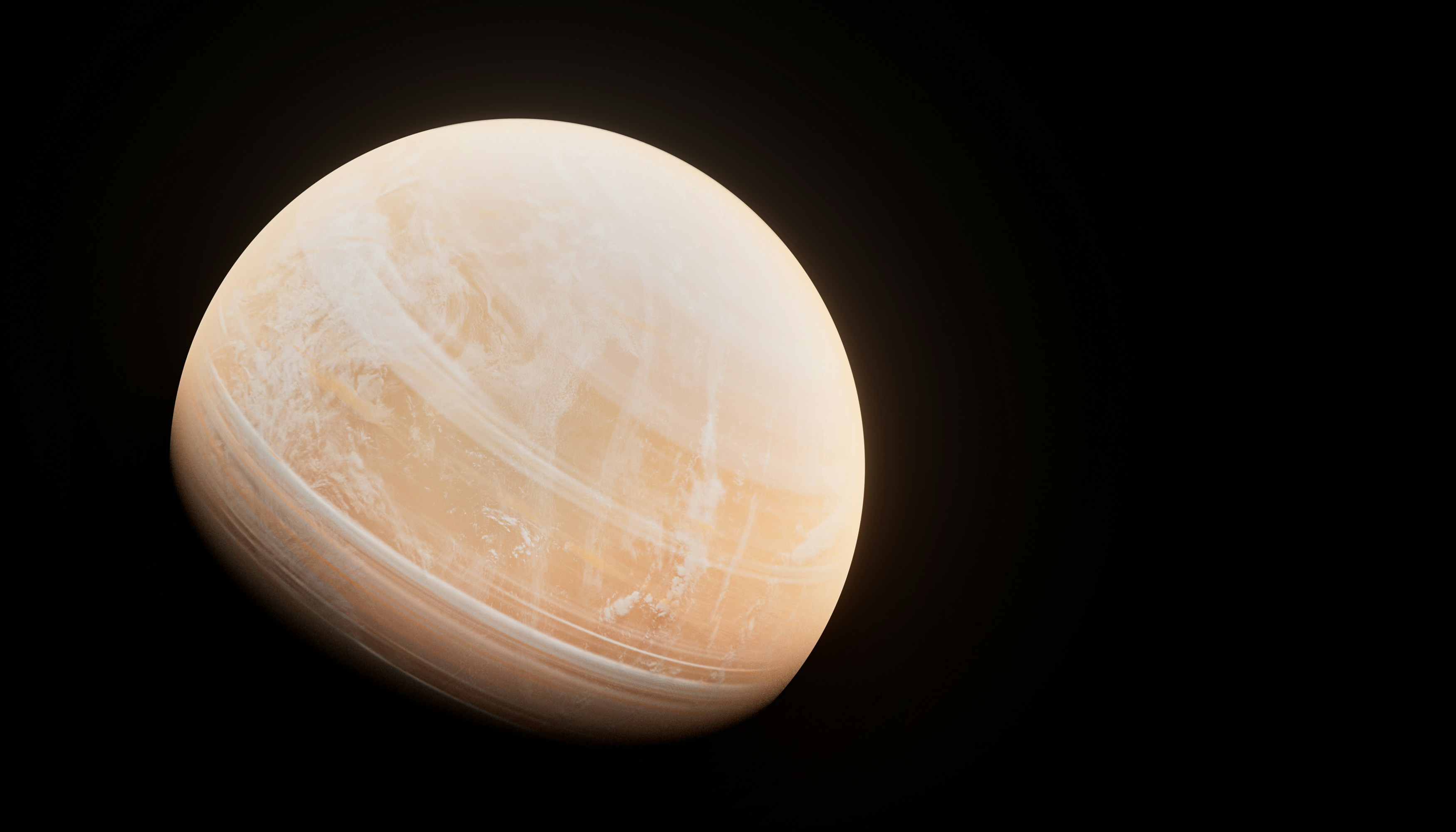
Clouds lap the planet in days while the rock day drags—angular momentum bookkeeping gets weird.
This long read belongs to Vortex Celest’s Venus tour, grouped under “Dynamics.” We keep one foot in mission logistics and another in the classroom—so trajectories, surfaces, and space weather never drift into mythology.
Editorial angle
Editorial field note: the fun is the hook; the structure is the kindness. We keep jokes where they clarify stakes, not where they smuggle confusion past the reader.
At a glance
Quick orientation: each line is the opening move of the matching section below, so you can jump to what you need.
- Thermal tides and GCM grudges — General circulation models negotiate friction, heating, and waves; disagreement is how science pays salaries.
- Probes as chronometers — Tracking cloud features from orbit tests friction laws we rarely respect on tidy whiteboards.
- Riddle with stakes — Understanding Venus helps calibrate models used elsewhere—including possible future Venus-like exoplanets.
- Treadmill mood — Imagine walking slowly while a conveyor belt sprints sideways—that's the cloud mood versus the ground sulk.
- Going deeper: Super-rotation that drags an atmosphere faster than the planet beneath it — We linger here because "super-rotation that drags an atmosphere faster than the planet beneath it" is where intuition usually hurries past the hard parts. Instruments do not rush; they integrate photons, count events,…
- What would actually change our minds — Healthy fields prize falsifiable futures: an instrument that closes a loophole, a survey that isolates a systematic, a sample return that argues in isotopes instead of adjectives.
Thermal tides and GCM grudges
General circulation models negotiate friction, heating, and waves; disagreement is how science pays salaries.
Two honest emotions belong here: dizzy curiosity and irritated precision. Neither plays well alone. Harmonize around: General circulation models negotiate friction, heating, and waves; disagreement is how science pays salaries.
If you walked into "Thermal tides and GCM grudges" from a meme, forgive yourself—that is recruitment. Promotion to understanding starts at: General circulation models negotiate friction, heating, and waves; disagreement is how science pays salaries. Swap "believe" for "provisionally trust, because…"—it sounds pedantic until you notice how much mental clarity you gain.
Probes as chronometers
Tracking cloud features from orbit tests friction laws we rarely respect on tidy whiteboards.
If you walked into "Probes as chronometers" from a meme, forgive yourself—that is recruitment. Promotion to understanding starts at: Tracking cloud features from orbit tests friction laws we rarely respect on tidy whiteboards.
Probes as chronometers earns its commas. A fair summary line: Tracking cloud features from orbit tests friction laws we rarely respect on tidy whiteboards. If that line feels bland, congratulations—that means it is resisting cheap theater while still respecting the abyss. Humor helps you carry weight; citations help you put it down in the right room. Carry both lightly.
Riddle with stakes
Understanding Venus helps calibrate models used elsewhere—including possible future Venus-like exoplanets.
Riddle with stakes: we will trade a little speed for immunity against brittle certainty. Receipt in hand: Understanding Venus helps calibrate models used elsewhere—including possible future Venus-like exoplanets.
Riddle with stakes earns its commas. A fair summary line: Understanding Venus helps calibrate models used elsewhere—including possible future Venus-like exoplanets. If that line feels bland, congratulations—that means it is resisting cheap theater while still respecting the abyss. If something feels paradoxical, check whether two different meanings of a word decided to wear the same costume.
Treadmill mood
Imagine walking slowly while a conveyor belt sprints sideways—that's the cloud mood versus the ground sulk.
If "Treadmill mood" were easy, it wouldn't need so many commas. Compressed honesty: Imagine walking slowly while a conveyor belt sprints sideways—that's the cloud mood versus the ground sulk.
Treadmill mood: the short version matters, but stories stick when you can smell the telescope grease. Starting point: Imagine walking slowly while a conveyor belt sprints sideways—that's the cloud mood versus the ground sulk. From there, the adult move is asking what would shrink the uncertainty without shrinking the ambition. Swap "believe" for "provisionally trust, because…"—it sounds pedantic until you notice how much mental clarity you gain.
Going deeper: Super-rotation that drags an atmosphere faster than the planet beneath it
We linger here because "super-rotation that drags an atmosphere faster than the planet beneath it" is where intuition usually hurries past the hard parts. Instruments do not rush; they integrate photons, count events, stack nights, and argue politely in PDF form.
Headline culture loves monocausal villains—one discovery, one hero, one tweet. Nature prefers committees. Vortex Celest's job is to introduce you to the committee without turning the meeting into naptime.
If you remember one thing, let it be this: depth feels like slower reading, but it buys you immunity against the next dozen overclaims. That is not cynicism; it is immunization.
What would actually change our minds
Healthy fields prize falsifiable futures: an instrument that closes a loophole, a survey that isolates a systematic, a sample return that argues in isotopes instead of adjectives.
If you leave with a sharper sense of what observation could flip the table, the article did its job—even if the universe remains stubbornly itself afterward.
If "What would actually change our minds" were easy, it wouldn't need so many commas. Compressed honesty: Healthy fields prize falsifiable futures: an instrument that closes a loophole, a survey that isolates a systematic, a sample return that argues in isotopes instead of adjectives.
Keep exploring
When you want adjacent angles on Solar System, the theme hub rounds up sibling articles in the same editorial voice. The full archive helps you compare how topics evolve as new missions and surveys release data.