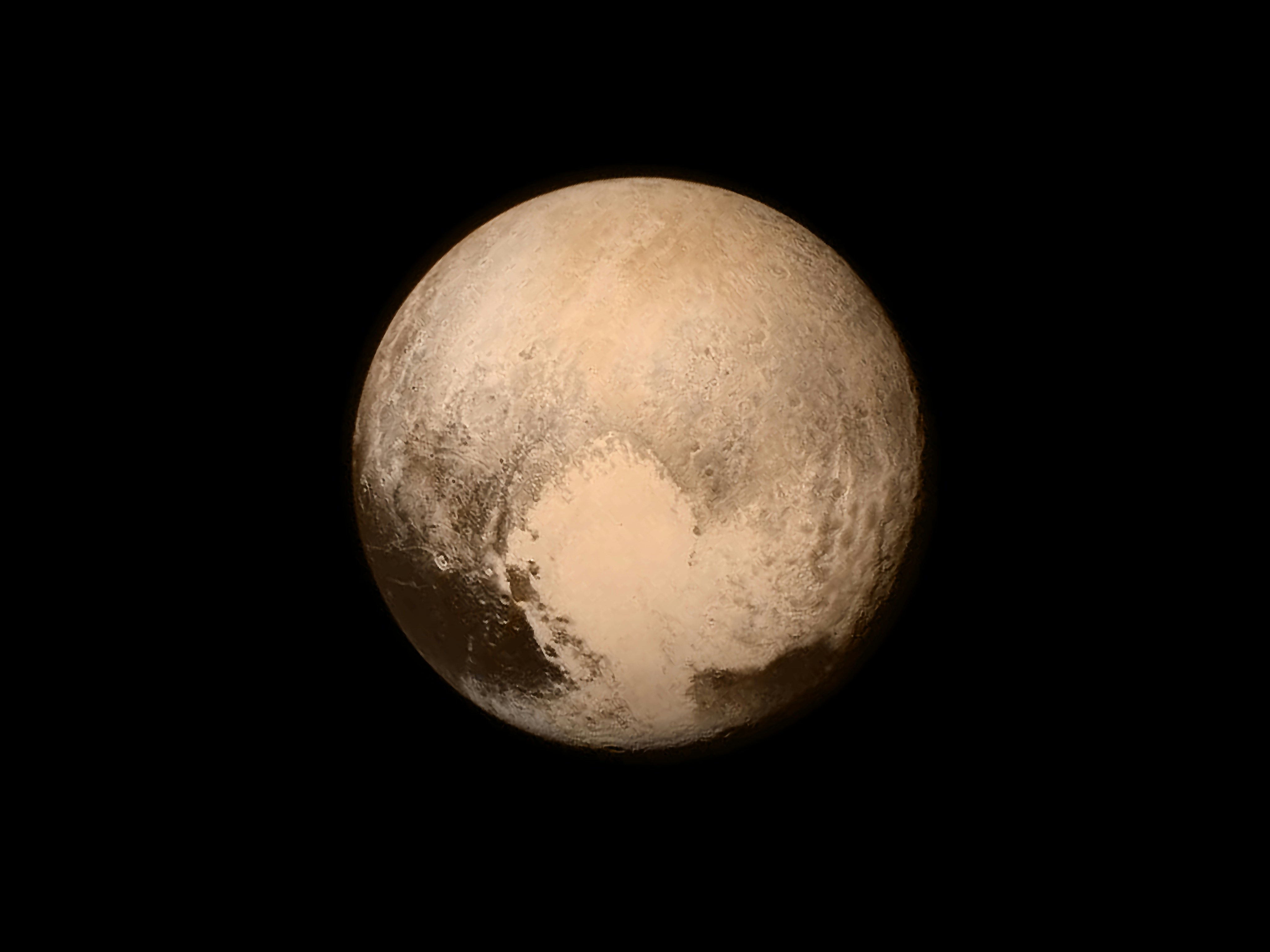
Kuiper Belt
May 7, 2026
Arrokoth: A Contact Binary Waltz
A snowman silhouette from the Kuiper Belt calmed merger theories with cuddly geometry.
Learn More54 guides listed by last update (newest first). Search to filter by keyword or destination.
A snowman silhouette from the Kuiper Belt calmed merger theories with cuddly geometry.
Learn More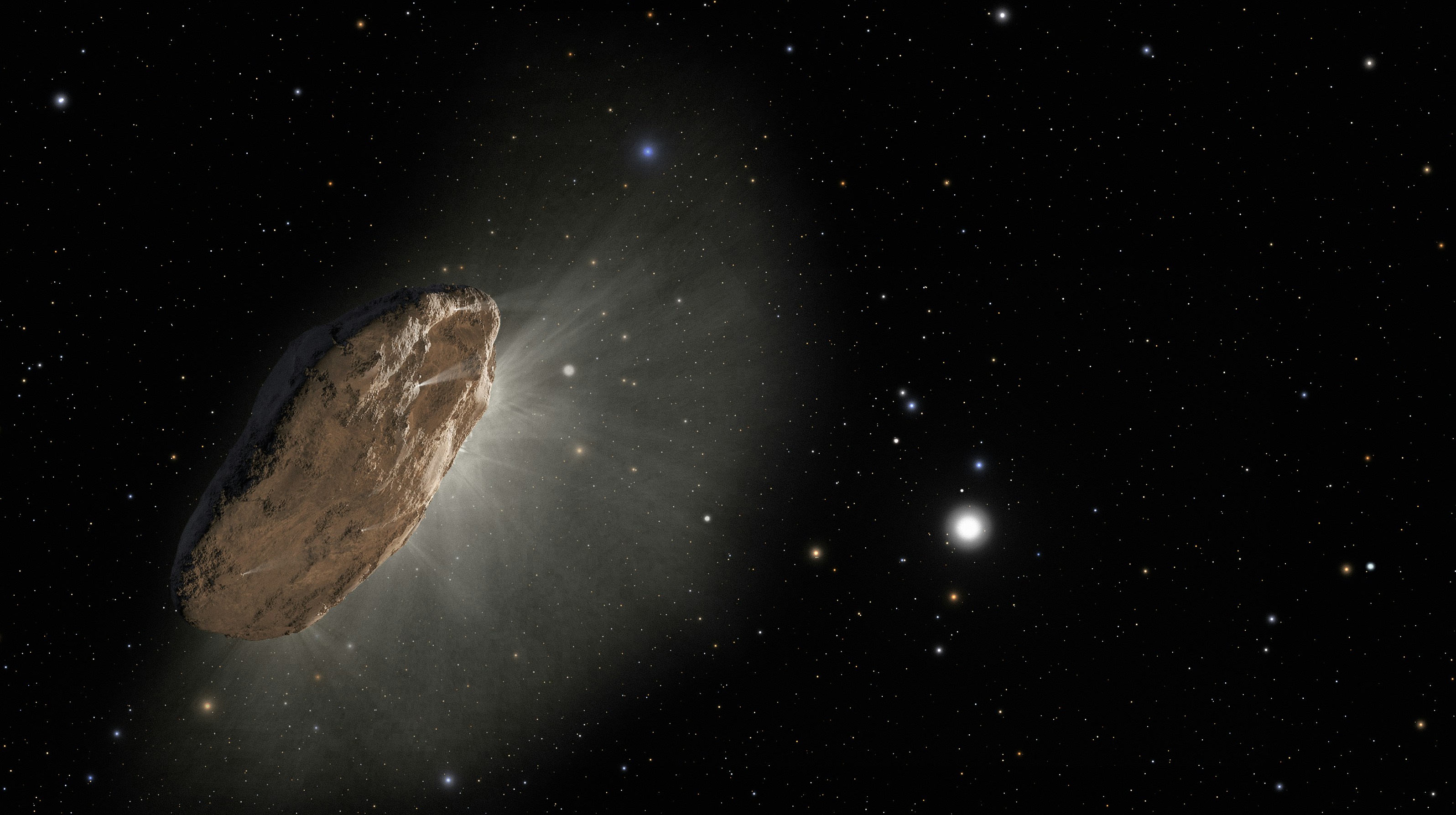
Deuterium-to-hydrogen ratios compare comets, asteroids, and Earth's oceans to messy delivery models.
Learn More
Pole-on solar geometry creates decade-long days and nights hemispherically rude.
Learn More
A six-sided jet stream mocks casual explanations while rewarding serious fluid dynamics.
Learn More
A moon orbiting backward whispers violent history while venting plumes like rude punctuation.
Learn More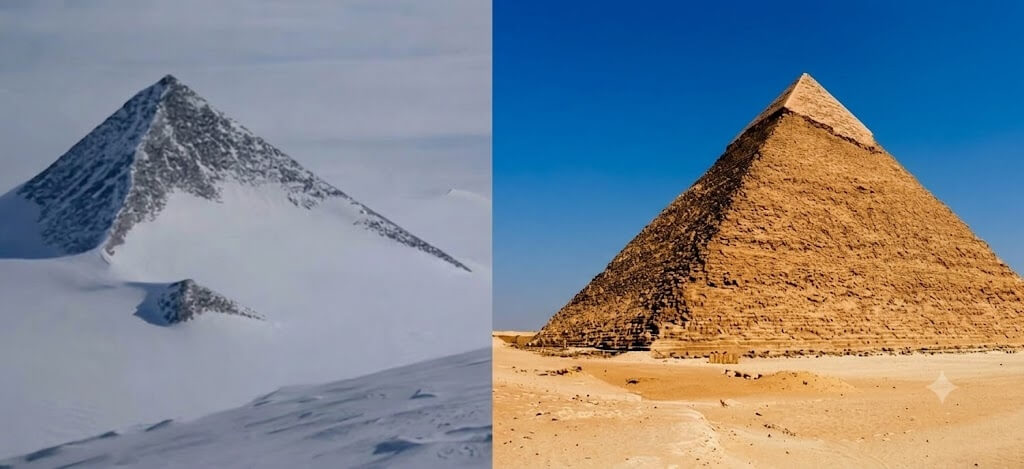
From Viking's D&M Pyramid in Cydonia to Spirit's miniature mound—are Martian yardangs fooling us, or is something stranger buried in the red dust?
Learn More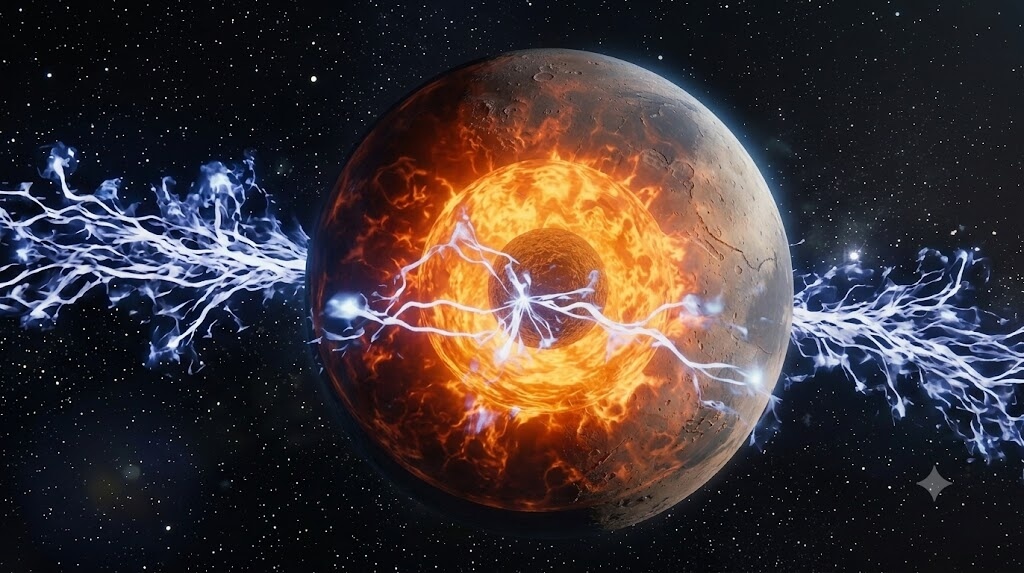
InSight marsquakes and fresh volcanic rock suggest Mars's iron core never fully solidified—it may be napping, not extinct.
Learn More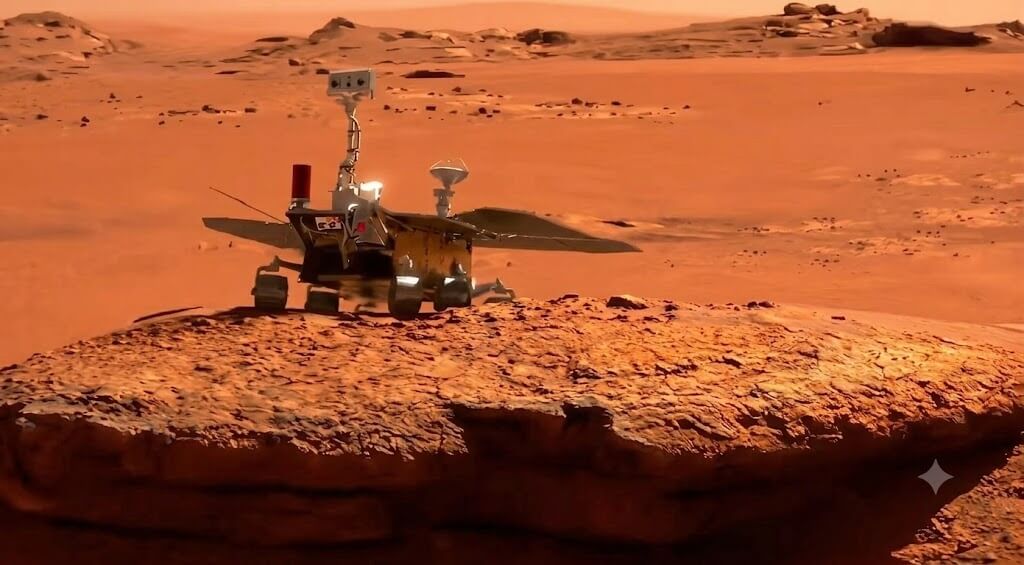
Martian regolith carries lethal chemistry and a biothreat wild card—NASA and ESA treat sample return as planetary protection, not a casual courier run.
Learn More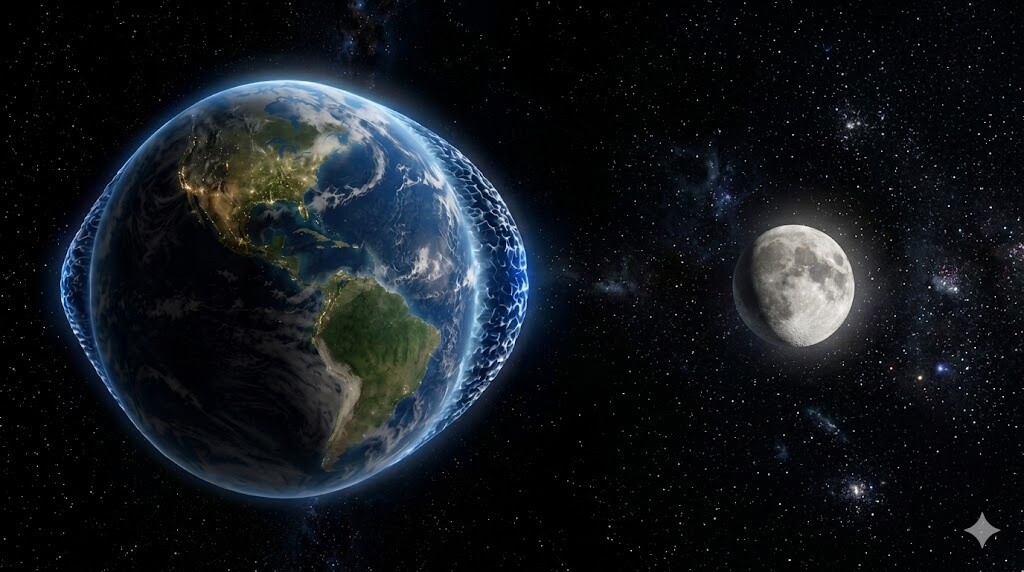
Differential lunar gravity stretches Earth into two ocean bulges—so each spin gives two highs and two lows—while the Sun stages spring and neap tides.
Learn More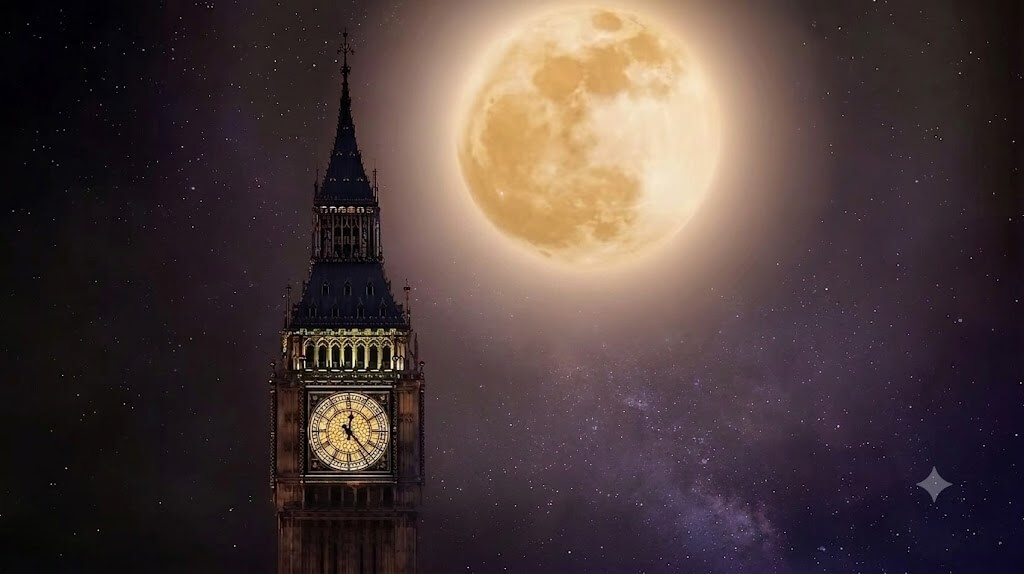
Earth's gravity braked the young Moon into tidal lock—one rotation per orbit—while lunar tides now slowly lengthen our days toward a distant face-to-face future.
Learn More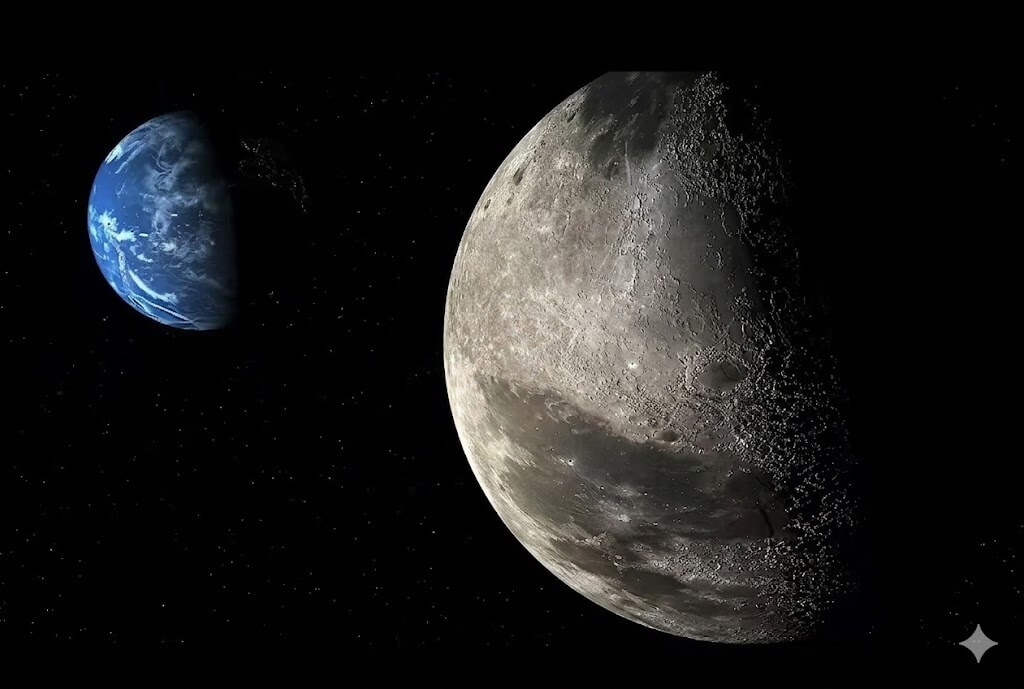
From fission and capture to hollow-ship rumors and the Giant Impact, Apollo rocks reveal the Moon as a hybrid child that tilted Earth and stirred life's first tides.
Learn More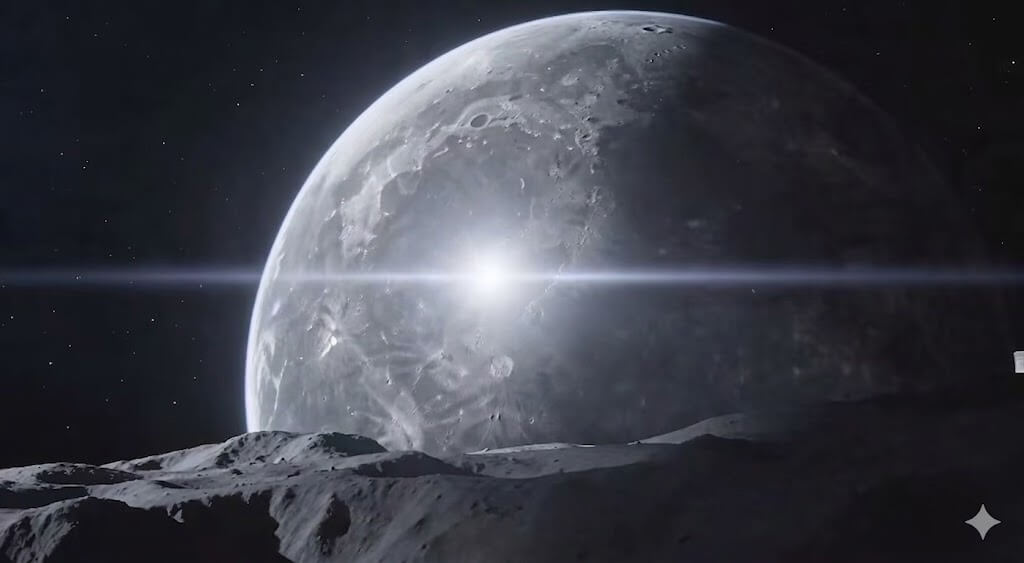
Transient Lunar Phenomena—fleeting flashes, crimson mists, and ghostly glows—have taunted telescopes for 60 years while three suspects dodge a final verdict.
Learn More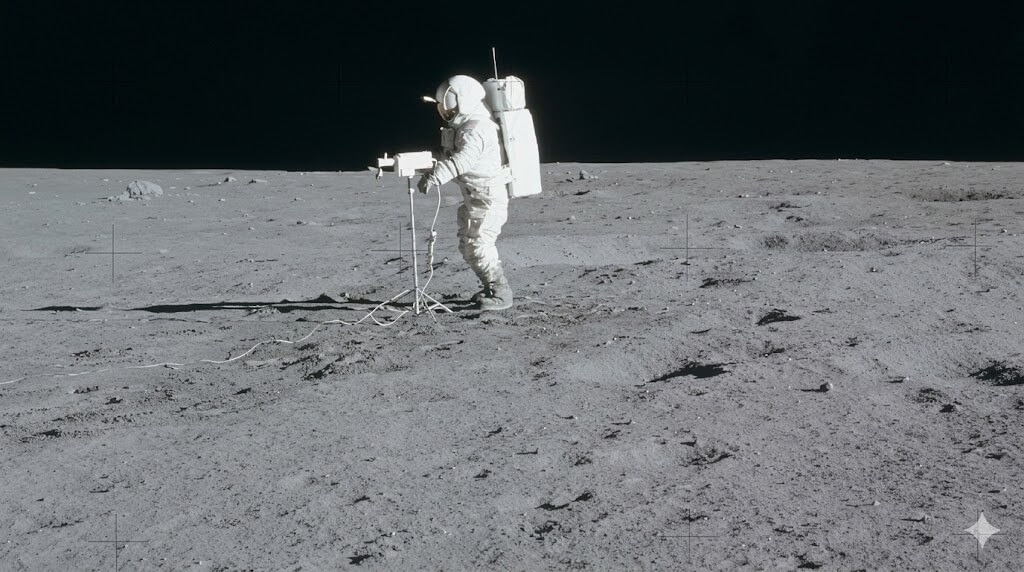
Neil Armstrong's bootprint still looks fresh at the Sea of Tranquility—but that stillness hides lethal heat swings, radiation, razor-sharp regolith, and silent micrometeorites.
Learn More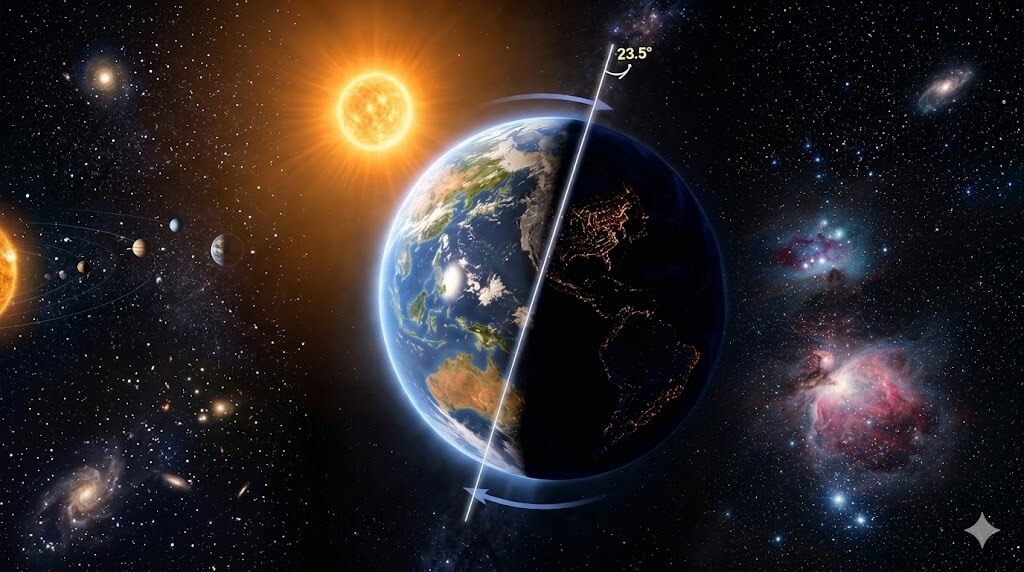
On January 3 Earth is closest to the Sun yet the Northern Hemisphere freezes—because a fixed 23.5° axial tilt, not distance, directs the seasons.
Learn More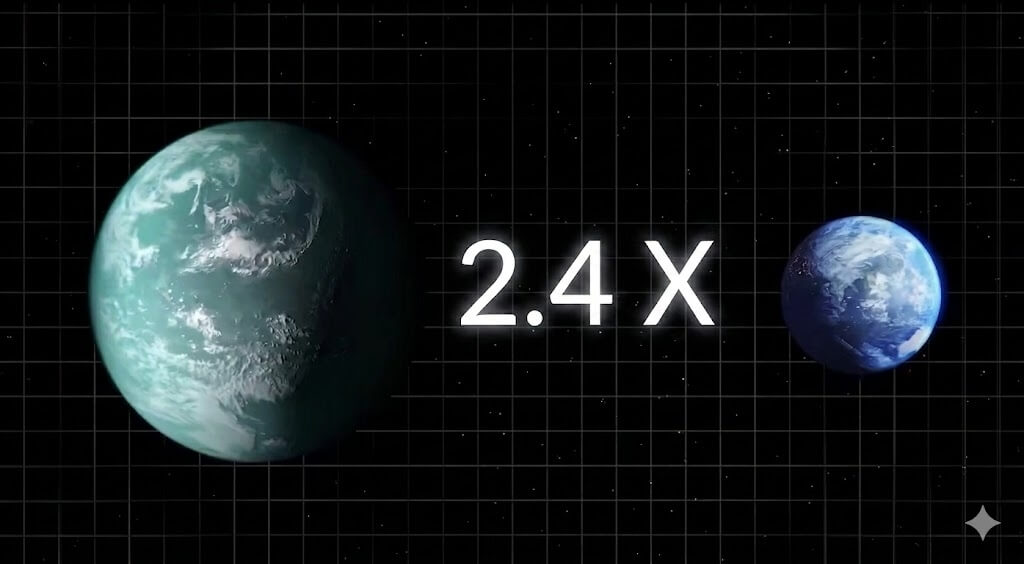
Discovered in 2011 in Cygnus, Kepler-22b seemed a perfect 22°C "Earth 2.0"—until closer study revealed a water world 635 light-years away that even our fastest ships could not reach in a million years.
Learn More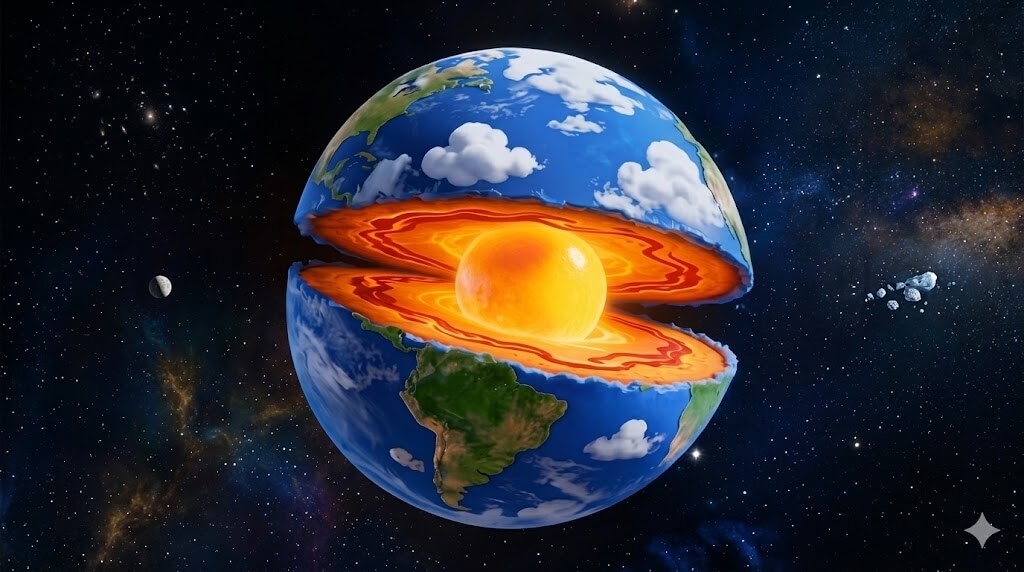
From a thin crust to a 6,000°C solid inner core, Earth's layered interior was forged in magma hell and mapped by earthquake echoes—long before humans dug 12 km deep.
Learn More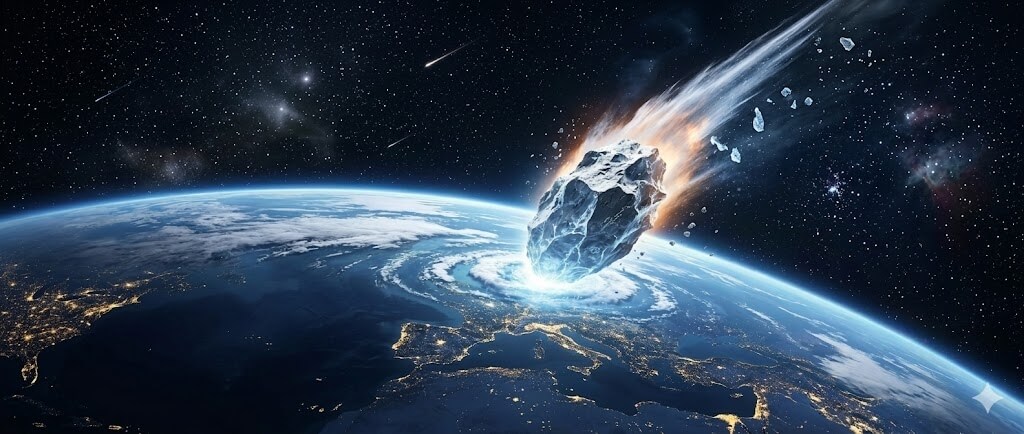
Volcanic steam, carbonaceous chondrites, and a multi-million-year deluge fused into the oceans that became Earth's lifeblood—half your glass may be cosmic delivery, half primordial sweat.
Learn More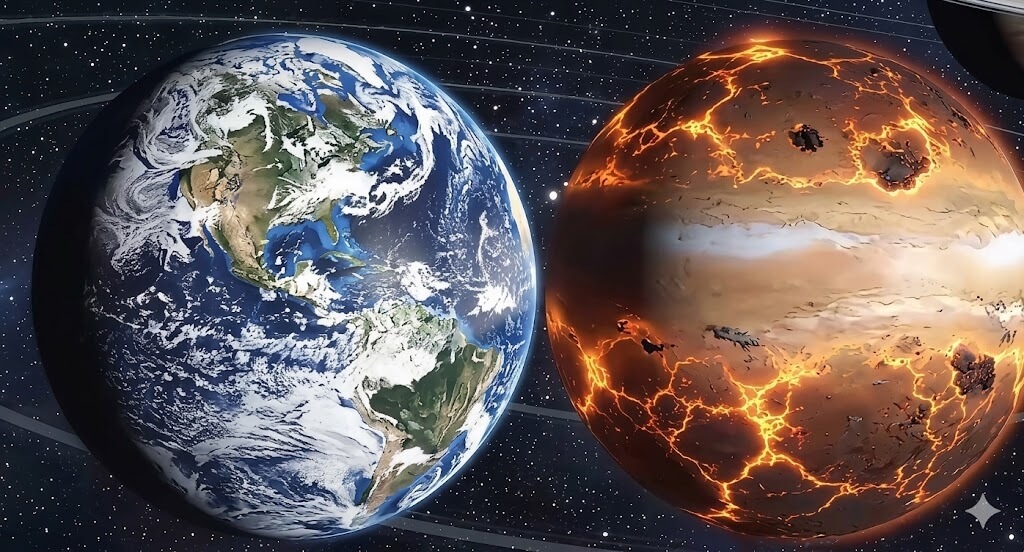
Born as cosmic twins, Earth and Venus diverged into paradise and purgatory—making Venus the ultimate mirror of our past, our possible future, and the fragility of life itself.
Learn More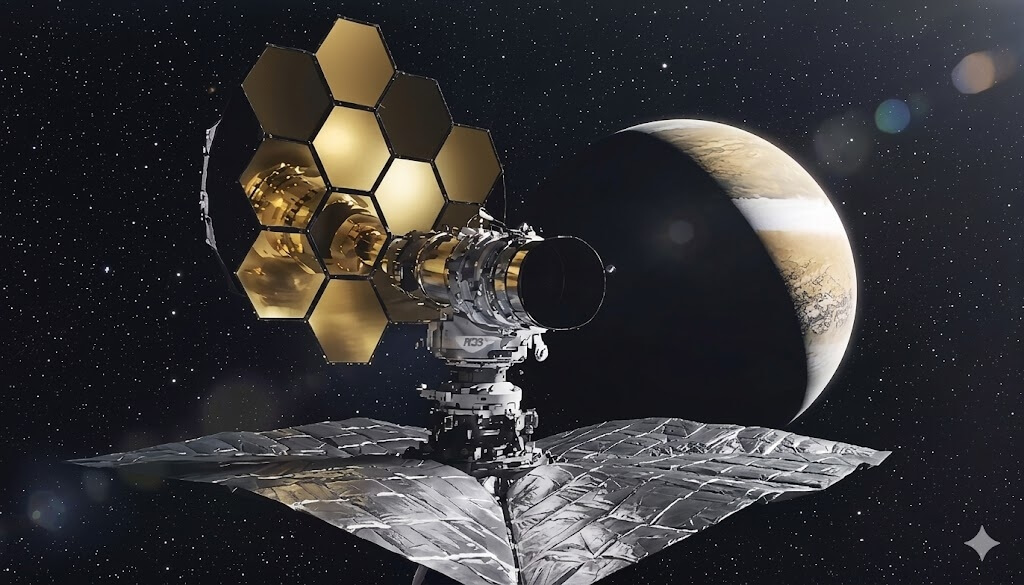
After Venera 13, NASA's DAVINCI+ and VERITAS, ESA's EnVision, and hell-hardened silicon carbide chips aim to end forty years of silence and read Venus—and Earth's possible future—in the mirror.
Learn More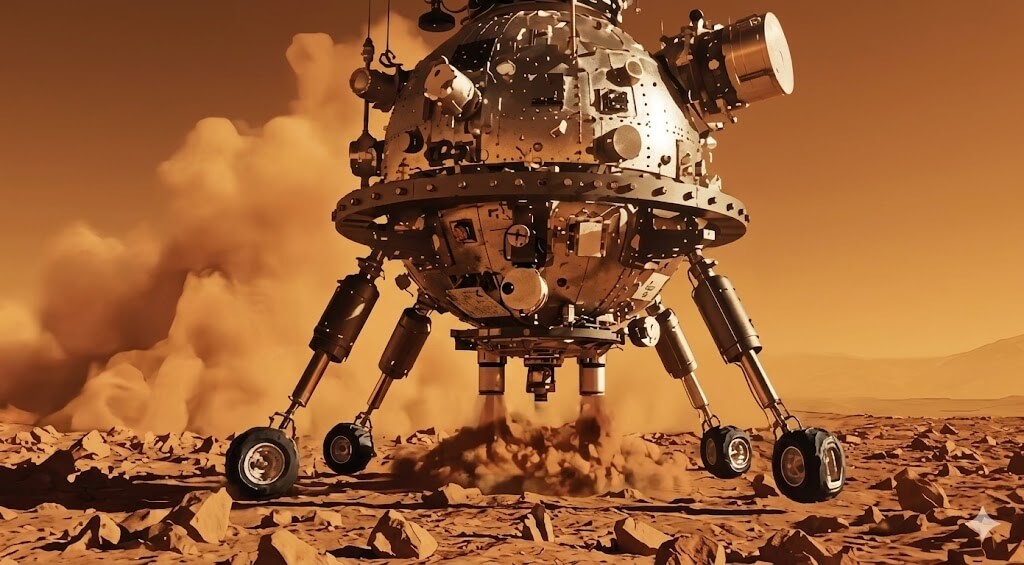
On March 1, 1982, the Soviet Venera 13 plunged through sulfuric acid clouds and 92 atmospheres of pressure to send humanity's first color images from Venus—and endure 127 minutes in a 460°C furnace.
Learn More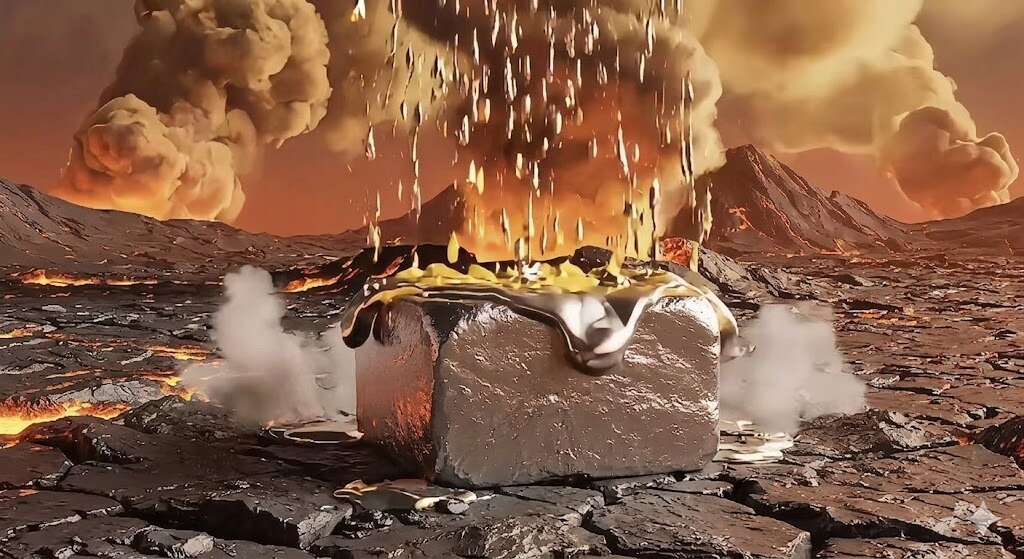
Four billion years ago Venus may have been an ocean world like Earth—until retrograde spin, a warming Sun, and runaway greenhouse turned it into a 460°C acid-soaked cautionary tale.
Learn More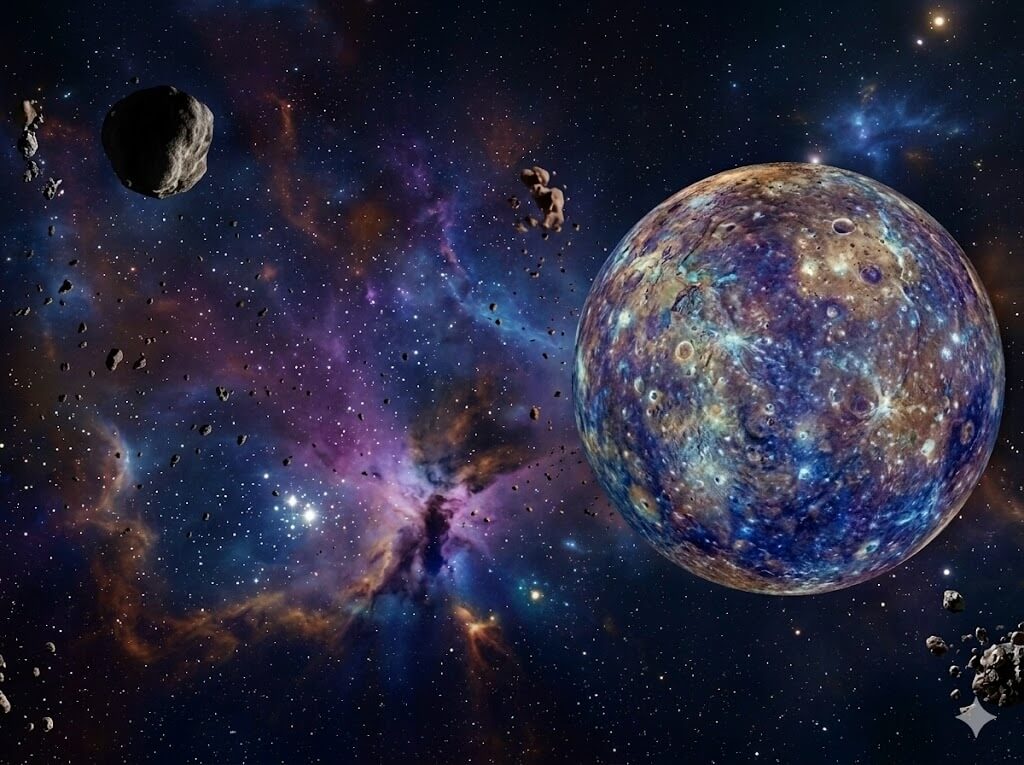
Sima Qian named Mercury the Water Star for its gray glow—yet it is a scorched wasteland hiding polar ice in eternal shadow and a 15-kilometer diamond cloak forged in its core.
Learn More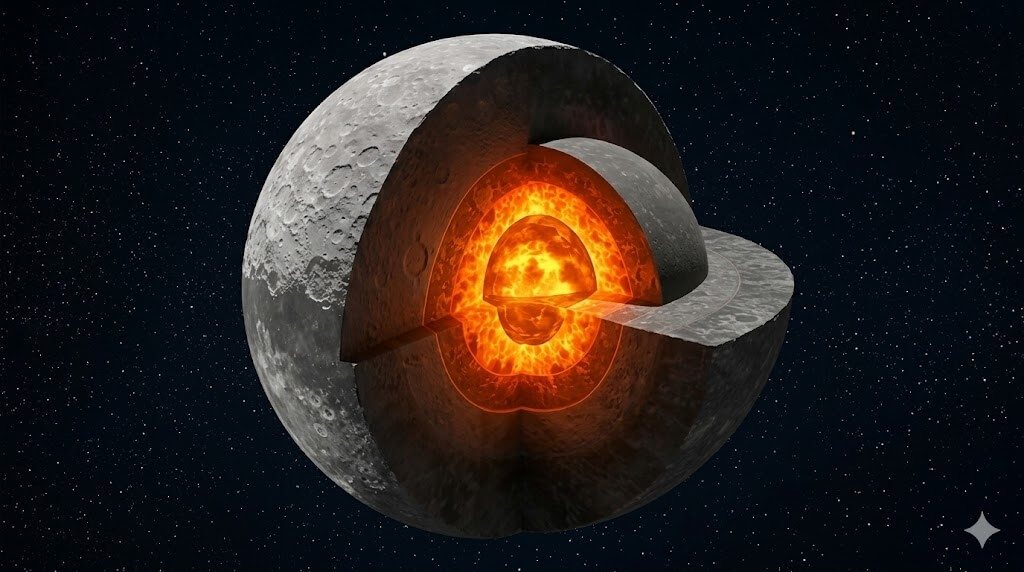
MESSENGER found a still-liquid iron core laced with sulfur, a warped magnetic field, shrinking scarps, and a final fate—swallowed by the Sun as a red giant in about five billion years.
Learn More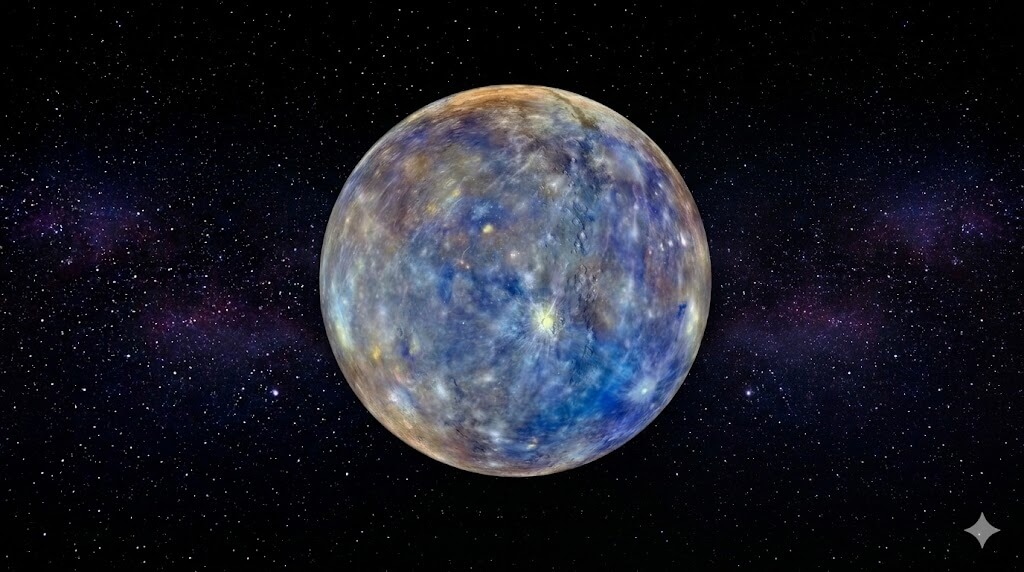
MESSENGER revealed a 24-million-kilometer sodium tail, polar ice in permanent shadow, and an iron-dominated body scarred by a catastrophic impact—Mercury's Song of Ice and Fire.
Learn More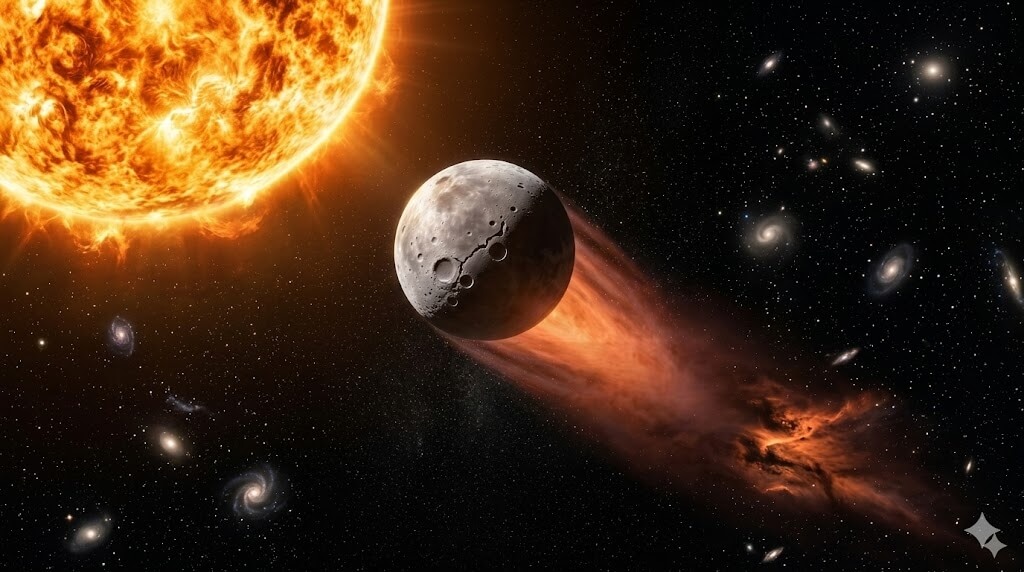
For 4.6 billion years Mercury has fled the Sun at 48 km/s—shedding a sodium tail, stripped to an iron skeleton, wrinkled by contraction, and hoarding polar ice in permanent shadow.
Learn More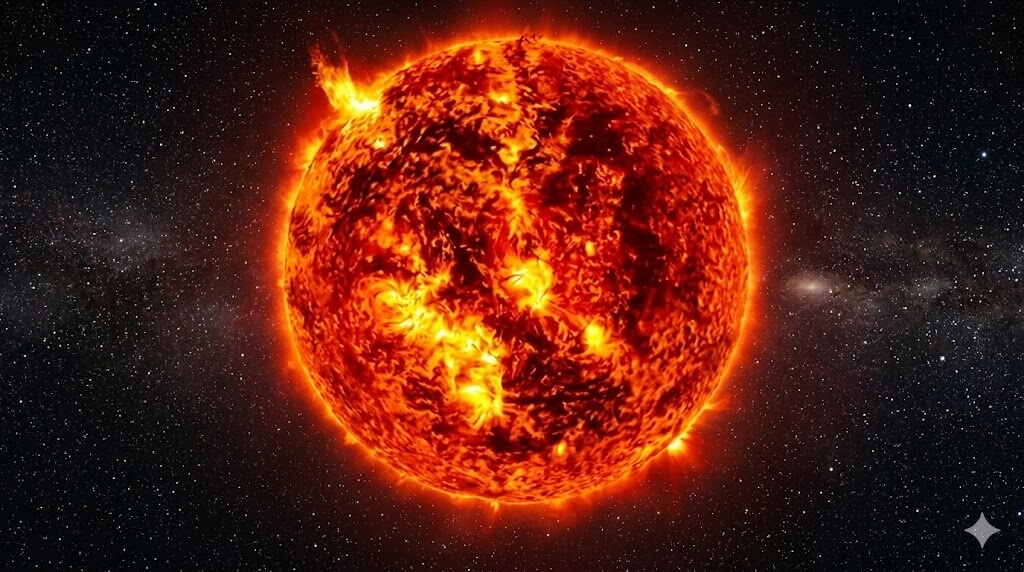
The Sun fuses four million tons of mass into energy each second—a cosmic time bomb whose red-giant fate and rising luminosity may make Earth uninhabitable in about a billion years.
Learn More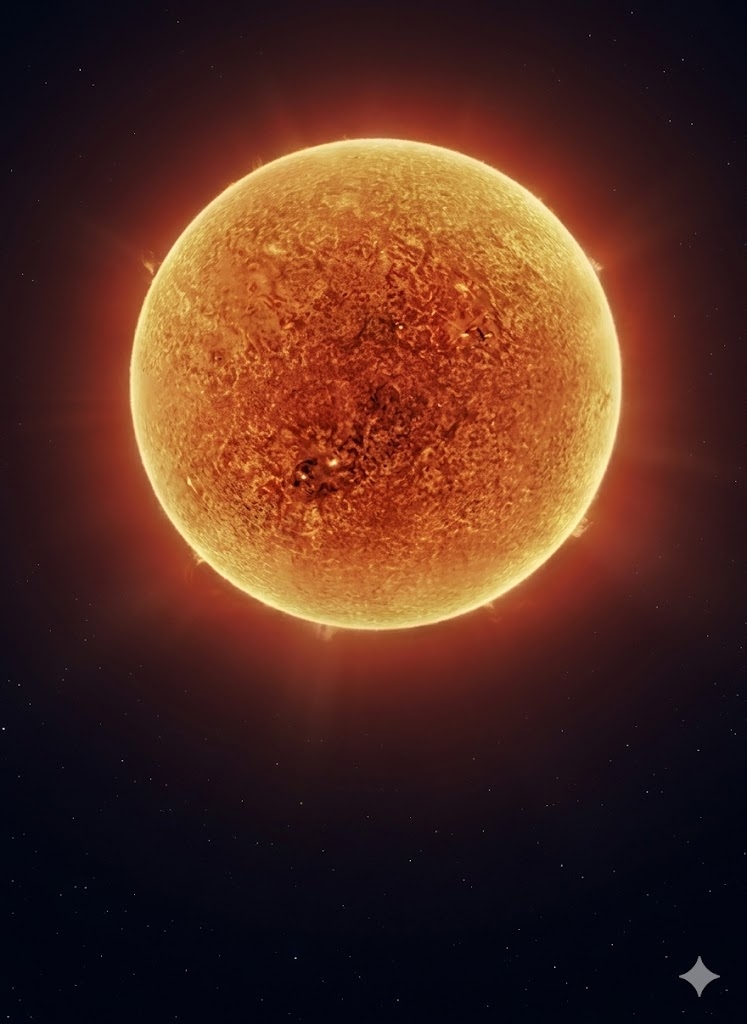
In space the Sun is blinding white, not yellow. Rayleigh scattering paints our sky blue and warms our sunsets, while a hidden green spectral peak sits beneath the white we see.
Learn More
After 8 minutes of normal life, Earth would face darkness, orbital escape, freezing oceans, atmospheric collapse, underground survival, and a long drift as a rogue planet.
Learn More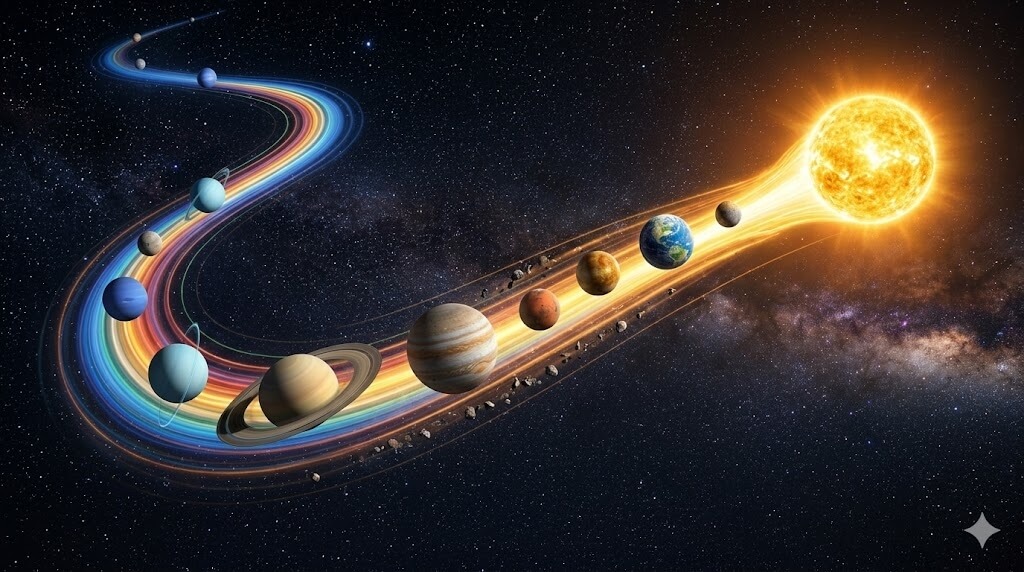
The Sun moves through the Milky Way at about 220 km/s, turning planetary orbits into a forward-stretching helix—not static circles on a flat disk.
Learn More
Io, Europa, Ganymede, and Callisto are a resonance chain writing oceanographies in orbit.
Learn More
Orbital architecture ties Neptune to scattered disks and resonant populations.
Learn More
Bortle scales, shielded fixtures, and intentional travel restore faint photons to eyes and sensors.
Learn More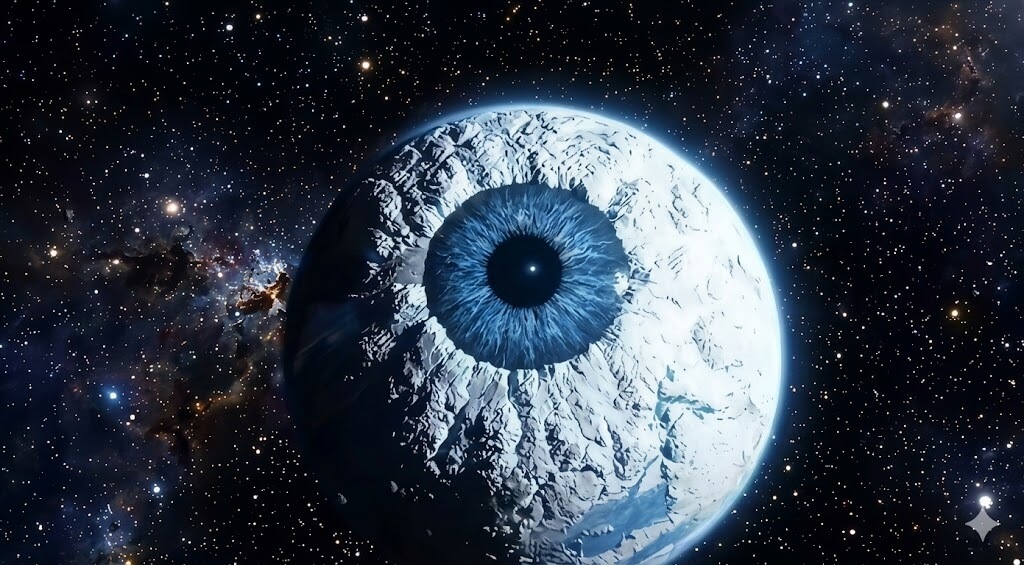
LHS 1140 b, a tidally locked super-Earth in Cetus, may host a bullseye ocean and nitrogen-rich atmosphere—a dramatic template for alien habitability.
Learn More
Angular distances, exposure blends, and foreground anchors turn alignments into stories.
Learn More
Gravitational assists scatter comets inward or outward—guardian narrative needs nuance.
Learn More
Jupiter's magnetosphere throws fireworks while hardware negotiates survival times.
Learn More
Pressure converts hydrogen into a conductor that sculpts the magnetic field we measure.
Learn More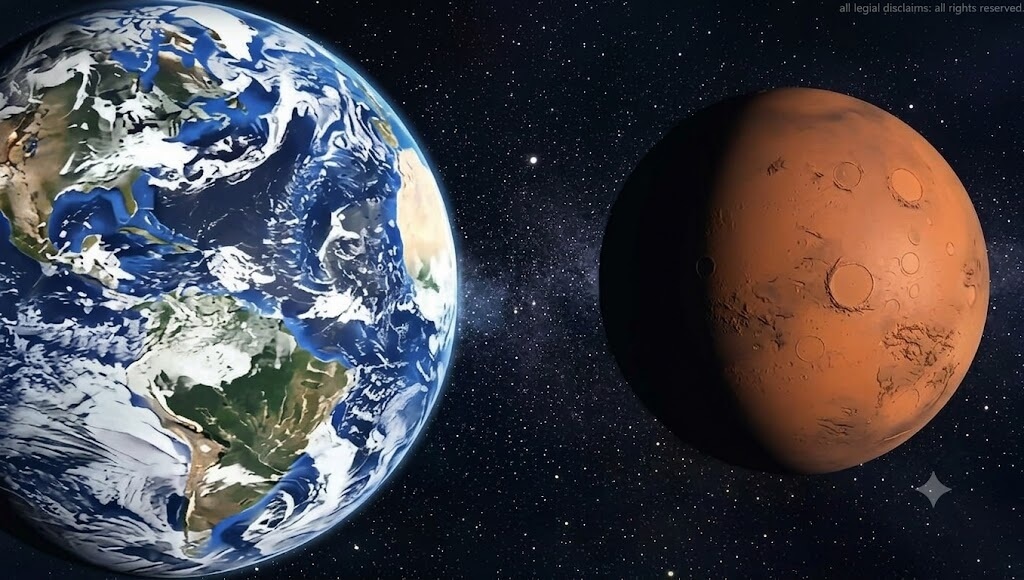
Four billion years ago Mars may have outpaced Earth as a cradle for life—today its frozen desert is a planetary cold case and a climate mirror.
Learn More
Sputnik Planitia's nitrogen ice cell might conceal an illusory equilibrium with climate and spin.
Learn More
Hayabusa2 revealed a spinning top of loose rocks with surprising organic generosity.
Learn More
Saturn's mean density below water inspires punchlines; interior models add adult context.
Learn More
Fast rotation deforms a world into an ellipsoid family portrait with rings.
Learn More
Neptune radiates more heat than it receives yet still runs jet streams that shame Earth's vocabulary.
Learn More
High-pressure experiments suggest exotic precipitation; Uranus interiors listen skeptically.
Learn More
Tiny moons sculpt sharp boundaries via resonant nudges—precision without scissors.
Learn More
A centuries-spanning anticyclone shrinks, wobbles, and still upstages every storm on Earth.
Learn More
Reflective deposits in Occator crater tie to briny eruptions and diminishing mystery.
Learn More
Neptune's warmth challenges adiabat stories and composition gradients.
Learn More
Mega-constellations tug at science and aesthetics; coexistence needs norms, not tantrums.
Learn More
ZHR is not a promise—geometry, moon phase, and coffee levels modulate delight.
Learn More
Methane rains, dunes march, and subsurface brines lurk—Earth analogies need footnotes.
Learn More
First known interstellar visitor combined lightcurve drama with anti-hype responsibilities.
Learn More
Subdued features frustrate casual viewers; chemistry and dynamics hide subtlety.
Learn More
Uranian rings confounded early narratives about ring physics and occultation luck.
Learn More