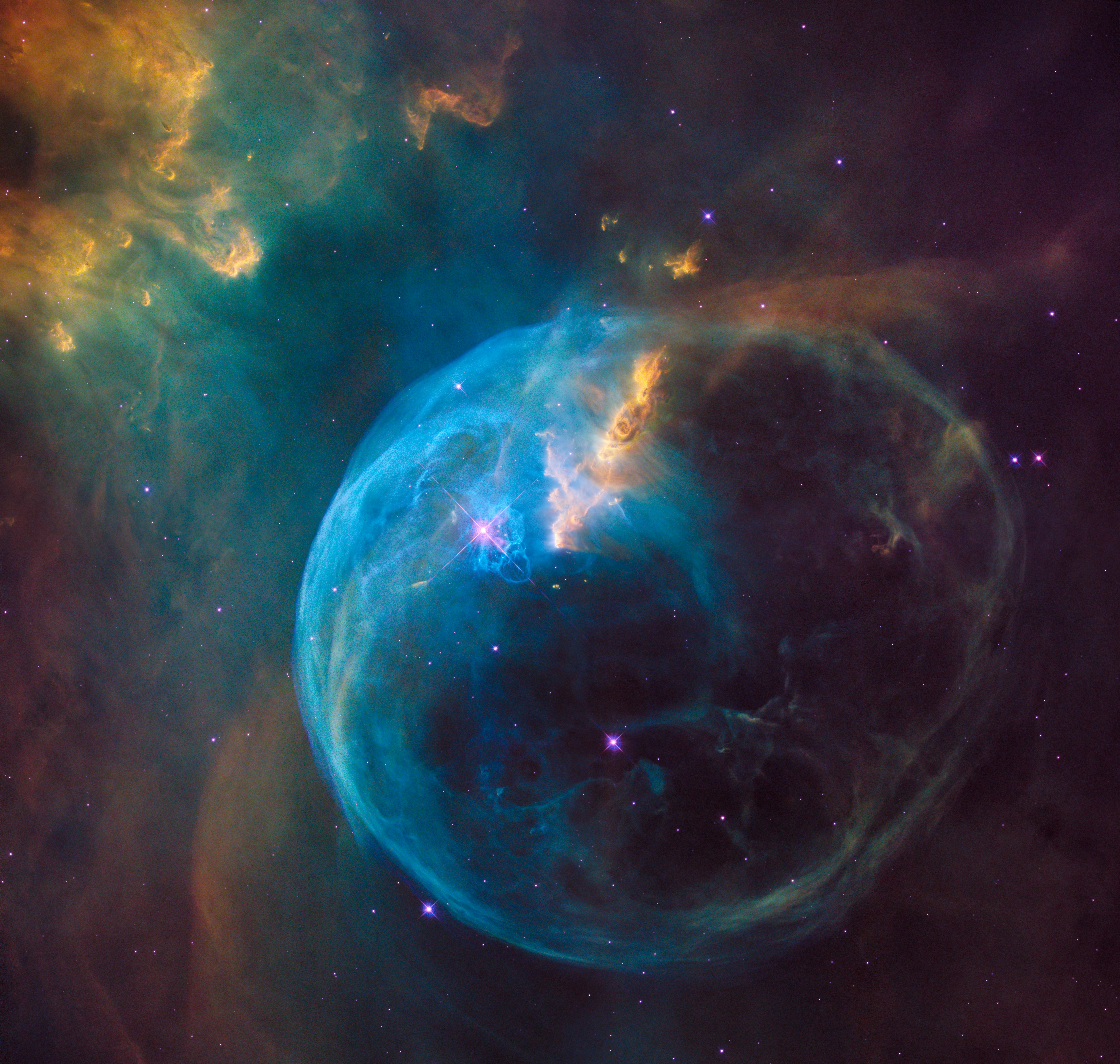
For most of a star's life it sits on the main sequence, converting hydrogen into helium while heat pressure balances its own mass—quiet only if you ignore the nuclear storm.
Vortex Celest’s Stars shelf gathers big ideas without burying the observables that make them testable. This article, tagged “Stellar physics,” spends extra time on what flickers, what lensing maps, and what survives skeptical replays.
Editorial angle
Editorial field note: the fun is the hook; the structure is the kindness. We keep jokes where they clarify stakes, not where they smuggle confusion past the reader.
At a glance
Quick orientation: each line is the opening move of the matching section below, so you can jump to what you need.
- Hydrostatic karaoke — Inside a star, inward gravity and outward radiation pressure take turns on the mic until thermal equilibrium feels like a boring bureaucracy. That 'boring' is what keeps photons marching from core to surface for milli…
- Why mass is destiny — Mass sets core temperature, fusion rate, and lifetime on a hair trigger. Heavier stars live fast and leave wreaths of heavy elements; lighter ones simmer like patient chefs reducing broth.
- What spectroscopy whispers — Absorption lines are chemistry calling cards: temperature, metallicity, and rotation leave fingerprints that astronomers read like mood rings for suns you'll never visit.
- Analogy: a kettle with ethics — Picture a kettle that can only whistle at one precise pressure—turn the knob a little and tone shifts. Stellar structure is that knob, negotiated by equations you can respect without pretending they're cozy.
- Going deeper: Main-sequence stability as negotiated by gravity and photon pressure — We linger here because "main-sequence stability as negotiated by gravity and photon pressure" is where intuition usually hurries past the hard parts. Instruments do not rush; they integrate photons, count events, stac…
- Playful rigor, serious patience — Vortex Celest leans into vivid language because boredom is not a scientific virtue—yet every metaphor here admits where it stops mapping. Punchlines are allowed; carelessness is not.
Hydrostatic karaoke
Inside a star, inward gravity and outward radiation pressure take turns on the mic until thermal equilibrium feels like a boring bureaucracy. That 'boring' is what keeps photons marching from core to surface for millions or billions of years.
"Hydrostatic karaoke" is one of those fields where vibes are dangerously accurate—which is funny until they aren't. Grounding vibes: Inside a star, inward gravity and outward radiation pressure take turns on the mic until thermal equilibrium feels like a boring bureaucracy
Hydrostatic karaoke: the short version matters, but stories stick when you can smell the telescope grease. Starting point: Inside a star, inward gravity and outward radiation pressure take turns on the mic until thermal equilibrium feels like a boring bureaucracy From there, the adult move is asking what would shrink the uncertainty without shrinking the ambition. Try translating the idea into something you could explain on a walk with a friend who likes questions more than answers: what changes if the measurement is noisy, biased, or brand new?
Why mass is destiny
Mass sets core temperature, fusion rate, and lifetime on a hair trigger. Heavier stars live fast and leave wreaths of heavy elements; lighter ones simmer like patient chefs reducing broth.
We use "Why mass is destiny" as a waypoint, not a wallpaper pattern. Waypoint meaning: Mass sets core temperature, fusion rate, and lifetime on a hair trigger
Why mass is destiny earns its commas. A fair summary line: Mass sets core temperature, fusion rate, and lifetime on a hair trigger If that line feels bland, congratulations—that means it is resisting cheap theater while still respecting the abyss. Imagine the next dataset as a polite guest who might rearrange your furniture. Make space; keep the exits clear.
What spectroscopy whispers
Absorption lines are chemistry calling cards: temperature, metallicity, and rotation leave fingerprints that astronomers read like mood rings for suns you'll never visit.
Under "What spectroscopy whispers," the coolest sentence is rarely the loudest—it is often the one that survives cross-checking. Exhibit A: Absorption lines are chemistry calling cards: temperature, metallicity, and rotation leave fingerprints that astronomers read like mood rings for suns you'll never visit.
Two honest emotions belong here: dizzy curiosity and irritated precision. Neither plays well alone. Harmonize around: Absorption lines are chemistry calling cards: temperature, metallicity, and rotation leave fingerprints that astronomers read like mood rings for suns you'll never visit. Look for one number you can remember for a week. If there isn't a number yet, look for a scale: bigger than a city? smaller than an atom?
Analogy: a kettle with ethics
Picture a kettle that can only whistle at one precise pressure—turn the knob a little and tone shifts. Stellar structure is that knob, negotiated by equations you can respect without pretending they're cozy.
Analogy: a kettle with ethics: the short version matters, but stories stick when you can smell the telescope grease. Starting point: Picture a kettle that can only whistle at one precise pressure—turn the knob a little and tone shifts From there, the adult move is asking what would shrink the uncertainty without shrinking the ambition.
Analogy: a kettle with ethics earns its commas. A fair summary line: Picture a kettle that can only whistle at one precise pressure—turn the knob a little and tone shifts If that line feels bland, congratulations—that means it is resisting cheap theater while still respecting the abyss. Look for one number you can remember for a week. If there isn't a number yet, look for a scale: bigger than a city? smaller than an atom?
Going deeper: Main-sequence stability as negotiated by gravity and photon pressure
We linger here because "main-sequence stability as negotiated by gravity and photon pressure" is where intuition usually hurries past the hard parts. Instruments do not rush; they integrate photons, count events, stack nights, and argue politely in PDF form.
Headline culture loves monocausal villains—one discovery, one hero, one tweet. Nature prefers committees. Vortex Celest's job is to introduce you to the committee without turning the meeting into naptime.
If you remember one thing, let it be this: depth feels like slower reading, but it buys you immunity against the next dozen overclaims. That is not cynicism; it is immunization.
Playful rigor, serious patience
Vortex Celest leans into vivid language because boredom is not a scientific virtue—yet every metaphor here admits where it stops mapping. Punchlines are allowed; carelessness is not.
When someone tells you a mystery is 'basically solved,' ask which budget of evidence paid for that calm tone. Often the answer is a press release wearing a lab coat.
Playful rigor, serious patience: keep your awe, trade your amnesia. Lock this in memory first: Vortex Celest leans into vivid language because boredom is not a scientific virtue—yet every metaphor here admits where it stops mapping
Keep exploring
When you want adjacent angles on Universe, the theme hub rounds up sibling articles in the same editorial voice. The full archive helps you compare how topics evolve as new missions and surveys release data.