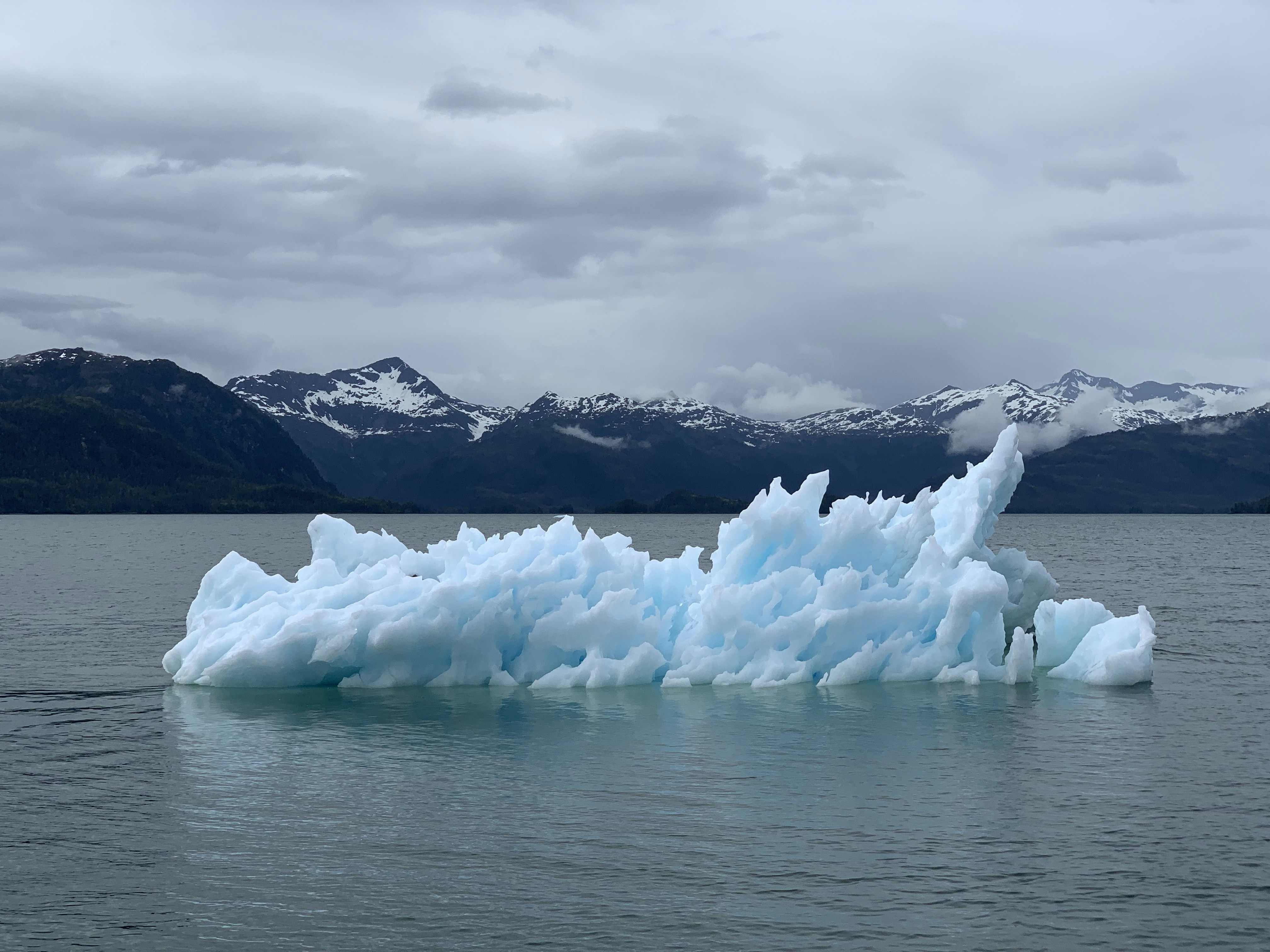
It sounds like something straight out of a sci-fi novel, but it's a very real phenomenon rooted in physics. As glaciers in Greenland and Antarctica melt at unprecedented rates, massive amounts of ice water are rushing into the oceans and shifting toward the equator. This has essentially made the Earth "thicker around the waist." According to the law of conservation of angular momentum—just like a figure skater slowing down their spin by extending their arms—the Earth's rotation has slowed down slightly as a result. While we are only talking about a few milliseconds a day, it's already enough to force timekeepers worldwide to postpone a "negative leap second" that was originally bound for our atomic clocks.
This is a fascinating topic. Since climate change is already bulking up the Earth's "waistline" (with more water piling up at the equator) and braking its rotation, what would happen if this trend continues and time keeps slowing down? To be clear, "time slowing down" doesn't mean your wristwatch will break or that humans will physically feel a slowdown. Instead, it triggers a domino effect across high-tech industries, geophysics, and aerospace engineering.
Wreaking Havoc on High-Tech Systems: The "Leap Second Crisis"
This is currently the most pressing and headache-inducing issue for scientists. Humanity relies on two primary timekeeping systems:
Universal Time (UT1): Time calculated based on Earth's rotation (by tracking the positions of stars and the sun).
International Atomic Time (TAI): An ultra-precise time calculated by atomic clocks, which won't lose a second over hundreds of thousands of years.
Because Earth's rotation is naturally erratic, speeding up and slowing down on a whim, scientists introduced the "leap second" to keep these two systems in sync. Interestingly, due to movements within the Earth's core, our planet actually showed a slight trend of speeding up over the past few decades. Scientists had predicted that we would need to implement the first-ever "negative leap second" (literally erasing one second from atomic clocks globally) around 2026.
However, climate change slammed on the brakes. The slowdown caused by melting polar ice happened to counteract the acceleration coming from the Earth's core. Recent studies show that the dreaded negative leap second has now been successfully pushed back to 2029 or even later.
While that might sound like a relief, if climate change continues unabated and the Earth keeps slowing down, we will eventually have to frequently inject "positive leap seconds" (adding a second to our clocks). Don't underestimate the chaos a single second can cause. The global internet backbone, GPS navigation, and high-frequency trading systems on Wall Street are all built on microsecond-level synchronization. Every time a leap second is introduced, tech giants like Meta and Google face a system crash risk akin to a mini-Y2K bug.
GPS Navigation Systems Getting "Lost"
The core mechanic of navigation systems like GPS and BeiDou relies on calculating the precise time difference it takes for a signal to travel between a satellite and your phone. Because light travels incredibly fast, an error of just one microsecond (a millionth of a second) can result in a 300-meter positioning error on the ground.
If Earth's rotation slows down while the atomic clocks on satellites keep ticking away at their original pace, the alignment between satellites and ground coordinates will experience a microscopic drift. To prevent self-driving cars from steering into ditches, missiles from missing their targets, and airplanes from misaligning with runways, scientists will have to recalibrate the orbital parameters of global satellite networks much more frequently.
Rocket Launches Will Burn More Fuel
Have you ever wondered why rocket launch sites are almost always built as close to the equator as possible? (Think of NASA's Kennedy Space Center.) It's because the linear velocity of Earth's rotation is at its fastest at the equator. Launching from there allows rockets to piggyback on Earth's rotational momentum, scoring a free "initial velocity boost" that saves a massive amount of fuel.
If the Earth's rotation continues to slow down, it means this free "slingshot effect" loses its punch. In the future, when humanity launches massive Mars rovers, space station modules, or heavy satellites, rockets will need to carry more fuel just to achieve escape velocity, driving up the already astronomical costs of space exploration.
Keep exploring
Explore related guides from the Climate Change hub, or browse the full Earth article list.