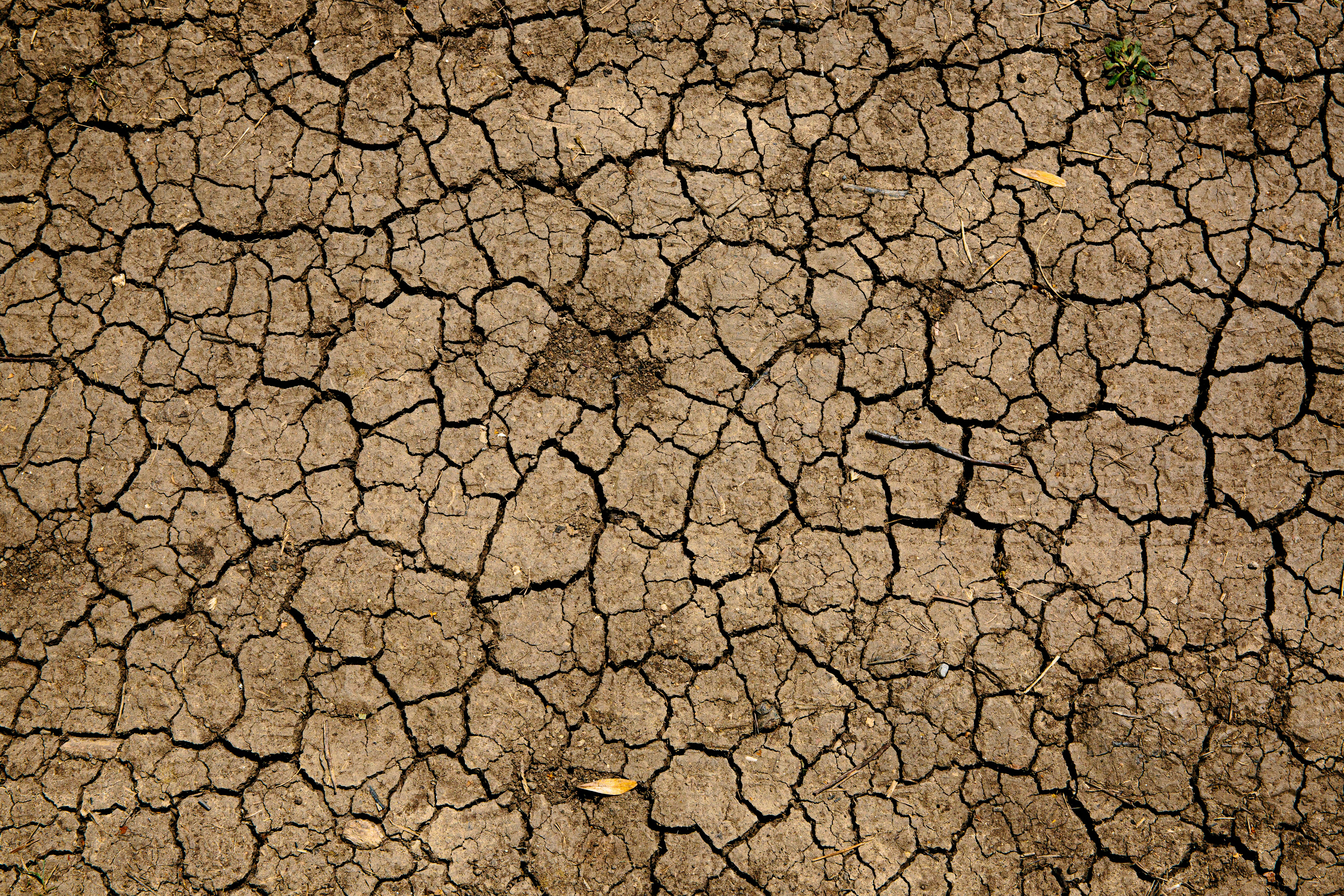
As the Arctic permafrost melts, scientists find themselves pulling double duty as both archaeologists and virologists. The permafrost acts like a massive, planet-sized freezer, perfectly preserving animal carcasses and pathogens from tens of thousands of years ago.
Zombie Bacteria Resurrected: In 2016, an anthrax outbreak tore through Siberia, infecting dozens of people and killing masses of reindeer. The culprit? A 75-year-old reindeer carcass that had died of anthrax and was trapped in the frozen soil. When an unusually hot summer thawed the permafrost, the bacteria woke right back up.
30,000-Year-Old Viruses: Scientists have successfully "revived" a giant virus dormant in the Siberian permafrost for over 30,000 years. Fortunately, this particular virus only infects amoebas and poses zero threat to humans. But as the ice continues to melt, no one knows what kind of ancient microbes—long forgotten by the human immune system—might be unleashed next.
While stories of gender-flipped sea turtles and a slowing planet are fascinating enough, the thawing of prehistoric microbes from the permafrost is the stuff of actual nightmares. The Arctic permafrost is Earth's ultimate cold storage room. Pitch-black, freezing, and devoid of oxygen, it provides the perfect conditions for preservation. Beneath the ice lie not only woolly mammoths from tens of thousands of years ago, but also billions of ancient bacteria and viruses completely absent from modern society. With global warming accelerating Arctic thaw at an alarming rate, scientists are blunt: we are opening a Pandora's box that has been sealed for tens of thousands, if not millions, of years.
They Aren't Dead; They Are "Cryptobiotic" Super-Survivors
It is easy to assume that after being frozen for millennia, these organisms would be dead and buried. But the microbial world plays by an entirely different set of rules. Many prehistoric bacteria and viruses possess an evolutionary superpower known as cryptobiosis or the ability to form endospores. When conditions become unlivable, they shut down their metabolism completely and tightly wrap their DNA, entering a state of suspended animation—neither truly alive nor truly dead. The moment the ice melts, temperatures rise, and moisture returns, they wake up instantly, like a microscopic Sleeping Beauty.
Awakened "Ancient Behemoths"
Scientists have already successfully revived several eye-opening prehistoric microbes in laboratory settings:
The 30,000-Year-Old "Siberian Giant Virus": In 2014, French scientists discovered Pithovirus sibericum buried 30 meters deep in the Siberian permafrost. This virus is hundreds of times larger than typical modern viruses—so big it can actually be seen under a standard light microscope. Chillingly, after 30,000 years of dormancy, it remained fully infectious upon unearthing (luckily, only to amoebas).
The 48,500-Year-Old "Zombie Virus": In 2023, the same research team revived a suite of ancient viruses from the Siberian permafrost, with the oldest dating back nearly 50,000 years. This smashed the record for the oldest dormant virus ever brought back to life.
"Immortal Bacteria" from Extreme Environments: Scientists have even extracted viable, active extremophiles from the deep layers of glaciers dating back millions of years.
Three Fatal Threats Within Pandora's Box
Why is the scientific community so anxious about these thawed-out relics? Because they represent three distinct ecological and health time bombs:
Threat 1: The Blind Spot of the Human Immune System
The human immune system is essentially a living record of historical warfare. Our white blood cells can identify and destroy viruses like the flu, COVID-19, or smallpox because our ancestors spent thousands of years fighting them, leaving a genetic "wanted poster" in our DNA. Ancient viruses, however, date back to an era before modern humans (Homo sapiens) had even migrated across the globe. To these pathogens, our immune system is a completely blank slate with zero antibodies or cellular memory. If a virus that was lethal to early hominids but entirely alien to modern humans leaks and spreads, its impact would be completely unpredictable.
Threat 2: Time-Traveling Antibiotic Resistance
We often view "superbugs" as a purely modern crisis caused by the misuse of antibiotics. Yet, scientists analyzing thawed prehistoric bacteria uncovered a reality-shattering truth: many bacteria from tens of thousands of years ago naturally carry resistance genes to modern antibiotics like penicillin and tetracycline. In the ancient past, these microbes evolved sophisticated chemical defenses just to compete with one another underground. If they revive and pass these resistance genes to modern superbugs via horizontal gene transfer, humanity's current line of antibiotic defense could collapse overnight.
Threat 3: The Resurgence of Deadly Pathogens
We don't even need to look back tens of thousands of years to find a threat; "recent monsters" from just a century ago are deadly enough.
The 2016 Siberian Anthrax Outbreak: When severe summer heatwaves hit the Yamal Peninsula in Siberia, they melted a layer of permafrost, exposing a 75-year-old reindeer carcass that had died of anthrax. As the ice thawed, the dormant anthrax spores "reawakened," contaminating the local soil and water supply, which subsequently infected the reindeer herds and surrounding human population, killing one child. Buried beneath the Arctic permafrost are countless human and animal remains from victims of history's worst plagues—smallpox, the Spanish flu, and the Black Death. As the planet warms, they are slowly creeping closer to the surface.
Human Activity is Accelerating a Dangerous Encounter
If these microorganisms were thawing out exclusively in the deserted wastes of the Arctic, the threat might remain contained. The worst part of this scenario, however, is a dangerous convergence: industrial expansion is actively crashing into this Pandora's box. As Arctic ice melts, shipping lanes are opening up, and countries like Russia and Canada are aggressively expanding mining, oil, and natural gas operations in the far north. Heavy machinery is ripping open the permafrost and drilling into deep geological strata, churning up ancient sediments that have been buried for eons. The miners, scientists, and explorers working these sites are inadvertently positioning themselves as the primary "patient zeros" for whatever ancient microbes are waiting to wake up.
This is perhaps the most humbling and terrifying aspect of climate change: it is not just changing our future; it is releasing our past. Those microscopic lifeforms, sealed away by time for millennia, are resting quietly beneath the thinning ice, waiting to open their eyes to a warming world.
Keep exploring
When you want adjacent angles on Earth, the theme hub rounds up sibling articles in the same editorial voice. The full archive helps you compare how topics evolve as new missions and surveys release data.