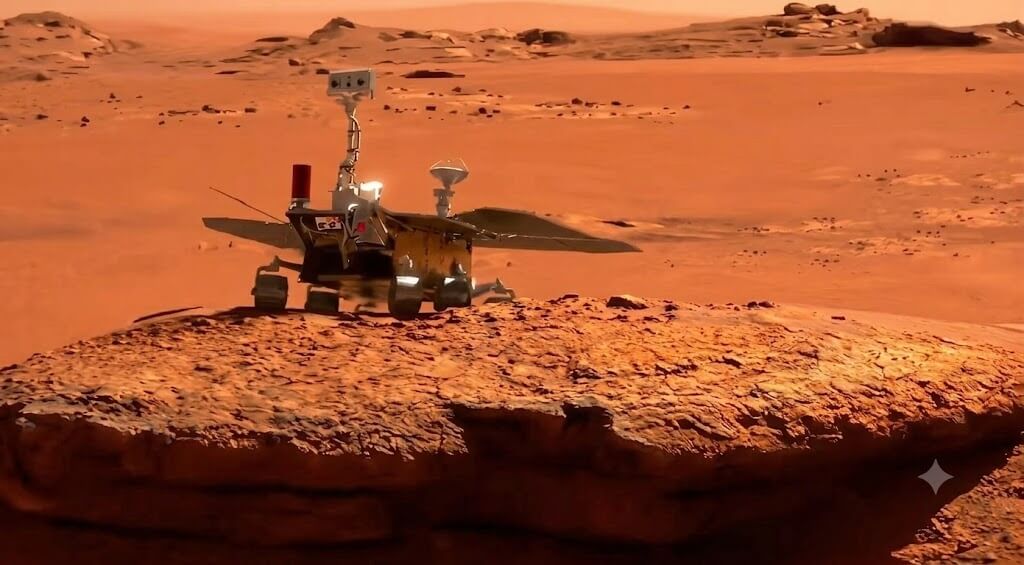
Why are scientists and space agencies, such as NASA and the ESA, being so incredibly cautious about bringing Martian soil back to Earth? Why do they state that we cannot just casually bring it home? This is far from sci-fi paranoia. It is because Martian soil carries lethal chemical toxicity, paired with the potential risk of a catastrophic biological threat to Earth's ecosystem.
We can break down the exact reasons behind this caution through these core factors:
Mars gets its iconic reddish-brown hue from the massive amounts of iron oxide (rust) covering its surface. However, if you peel back that "red veil," the actual composition of Martian soil (scientifically termed Martian basaltic regolith) is remarkably harsh:Baseline Elements: It consists primarily of silicon dioxide, iron oxide, aluminum oxide, calcium oxide, and magnesium oxide—very similar to volcanic ash on Earth.
Lethal Trace Elements: The soil contains high concentrations of heavy metals, including chromium, cadmium, lead, and cobalt.The Most Terrifying Component: Perchlorates, which are heavily scattered across the entire surface of the planet.Martian soil contains roughly 0.5% to 1% perchlorates (such as magnesium perchlorate and sodium perchlorate). This is a concentration rarely seen—and highly dangerous—on Earth. Its toxicity and hazards manifest in three major ways:
Perchlorates are potent thyroid disruptors. Their ionic structure closely mimics that of iodide ions. If humans inhale or ingest fine Martian dust, the perchlorates will aggressively block the body's iodine absorption pathways. This shuts down the thyroid's ability to uptake iodine, triggering severe hypothyroidism, metabolic chaos, and potentially fatal health crises.
Perchlorate is an exceptionally strong oxidizer (commonly utilized on Earth as a primary ingredient in solid rocket fuel and fireworks), meaning it is highly corrosive.
If Martian soil were to enter Earth's environment without strict containment, it would destroy plant root systems and kill off beneficial soil microbes.For astronauts, exposure to perchlorate dust would cause severe chemical burns to the respiratory tract, lungs, and eyes.Under certain conditions—such as exposure to high temperatures or contact with specific organic materials—perchlorates become highly unstable and can react violently or even explode. This poses a massive engineering hazard for sample preservation and laboratory analysis.
As dangerous as the chemical toxicity is, scientists are far more terrified of biological contamination. In the international aerospace community, this risk is managed under a strict protocol known as "Backward Planetary Protection."While the surface of Mars appears completely dead today, scientists cannot entirely rule out the possibility that some form of dormant extraterrestrial microorganisms (bacteria, archaea, or viruses) is hiding deep within the soil or inside microscopic rock fissures.
A Total Void in Our Immune System: Every living thing on Earth (humans, animals, plants) has evolved over billions of years without ever encountering Martian life. Our immune systems have zero antibodies and zero natural defenses against Martian microbes.Ecological Invasion: If a sample container were to leak during re-entry, landing, or laboratory analysis, and these Martian organisms adapted to Earth's environment and began multiplying, it could trigger a global super-plague affecting plants, animals, or humans—potentially devastating Earth's entire ecological balance.
The Martian surface is relentlessly blasted by intense UV rays, cosmic radiation, extreme dryness, and a near-total lack of oxygen. Any Martian life capable of surviving in such an extreme environment would inherently possess terrifying resilience, featuring advanced resistance to radiation and environmental stress. Standard Earth sterilization methods—like UV light, heat, or even conventional antibiotics—might prove completely useless against them.
Keep exploring
When you want adjacent angles on Solar System, the theme hub rounds up sibling articles in the same editorial voice. The full archive helps you compare how topics evolve as new missions and surveys release data.